The authentic and timeless world of Ralph Lauren
November 2025
RL/People

The Many Amazing Lives of Neil Zarama

This season marks the debut of a special collaboration with one of Native silversmithing’s great new talents, who shares our passion for authenticity and storytelling. The handmade collection includes cuffs, rings, belt buckles, and more, and the man behind it has himself been forged by a life full of adventure and invention.
By Tommy Orange
I could see straight away talking to the Apache artist Neil Zarama, that there was too much story to tell, and just no way there’d be time to tell it. There’s a kind of earned urgency you can hear in a person’s voice, a person’s who’s really lived and knows that life, their life, the story of it has yet to be told. Words and scenes came streaming out of him like from a man run out of time. Not that he wasn’t making sense, or like he was manic, not at all. Think of the speed of punk rock lyrics. One of the many things he called himself was a punk rock city kid. The urgency in his voice related I think to some part of him knowing he had all these stories to tell, had forged them into silver by hand, decorated the silver with turquoise, old-style, influenced by Navajo jewelry makers, but hadn’t yet expressed the particular tapestry that made up his long and varied life. Neil is cool, level-headed as they come. Real, too, in that down-to-earth way that comes round about midnight of a life already lived in full, and yet with so much more to go, with so much vibrancy and drive in his voice. So even before he told me, I could hear in his voice that he’d lived many lives before arriving at this current iteration, 56, owner and silversmith artist of the company Whirling Log and Arrow; motorcycle builder (Arrow Choppers); father; husband; and supplier of chopper bling, bolo tie, bracelet, ring, necklace, belt, you name it, to today's most notable Indigenous actors—Jason Momoa, Zahn McClarnon, D’Pharaoh Woon-A-Tai, to name a few.
HAMMER TIME
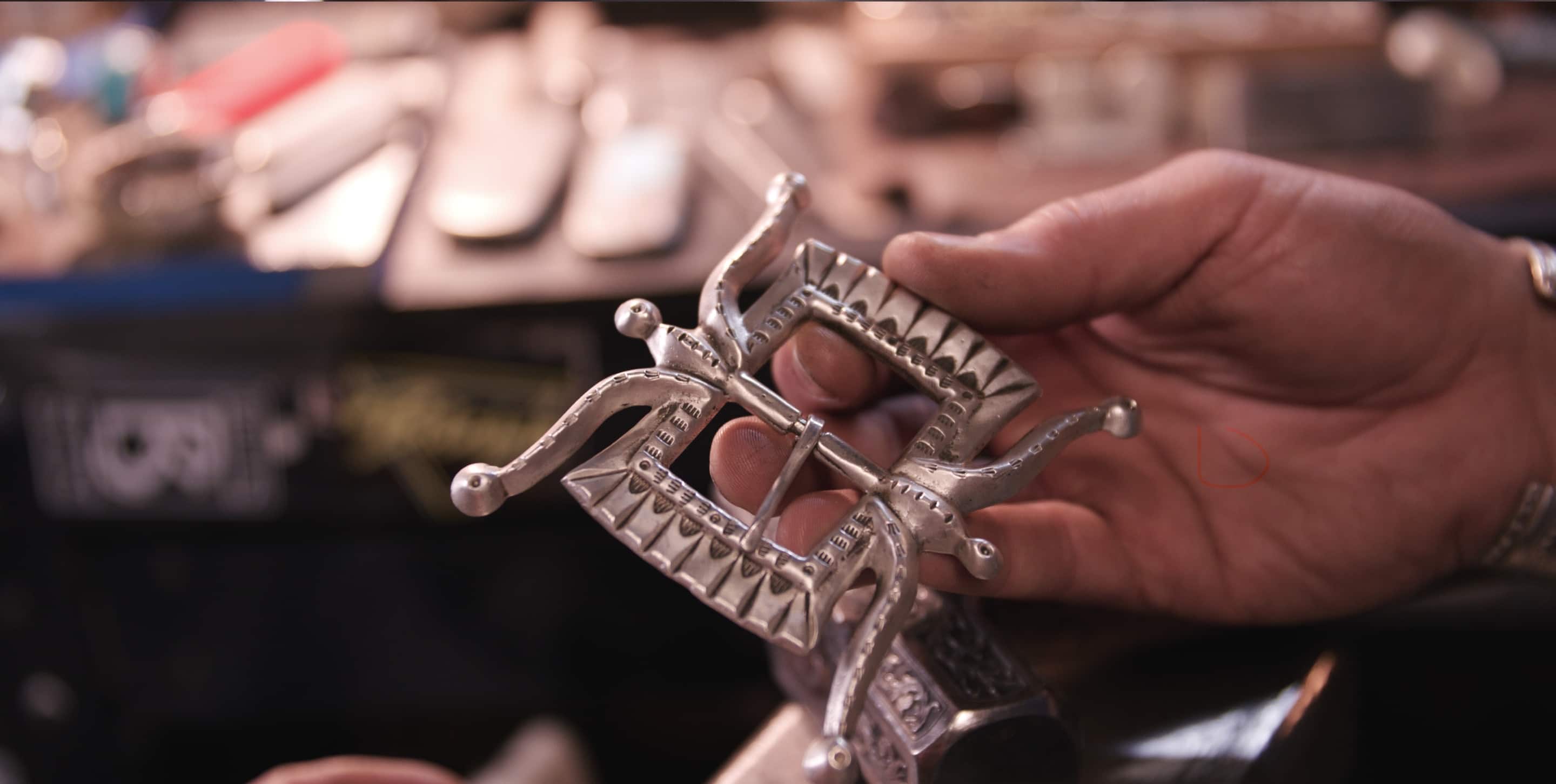
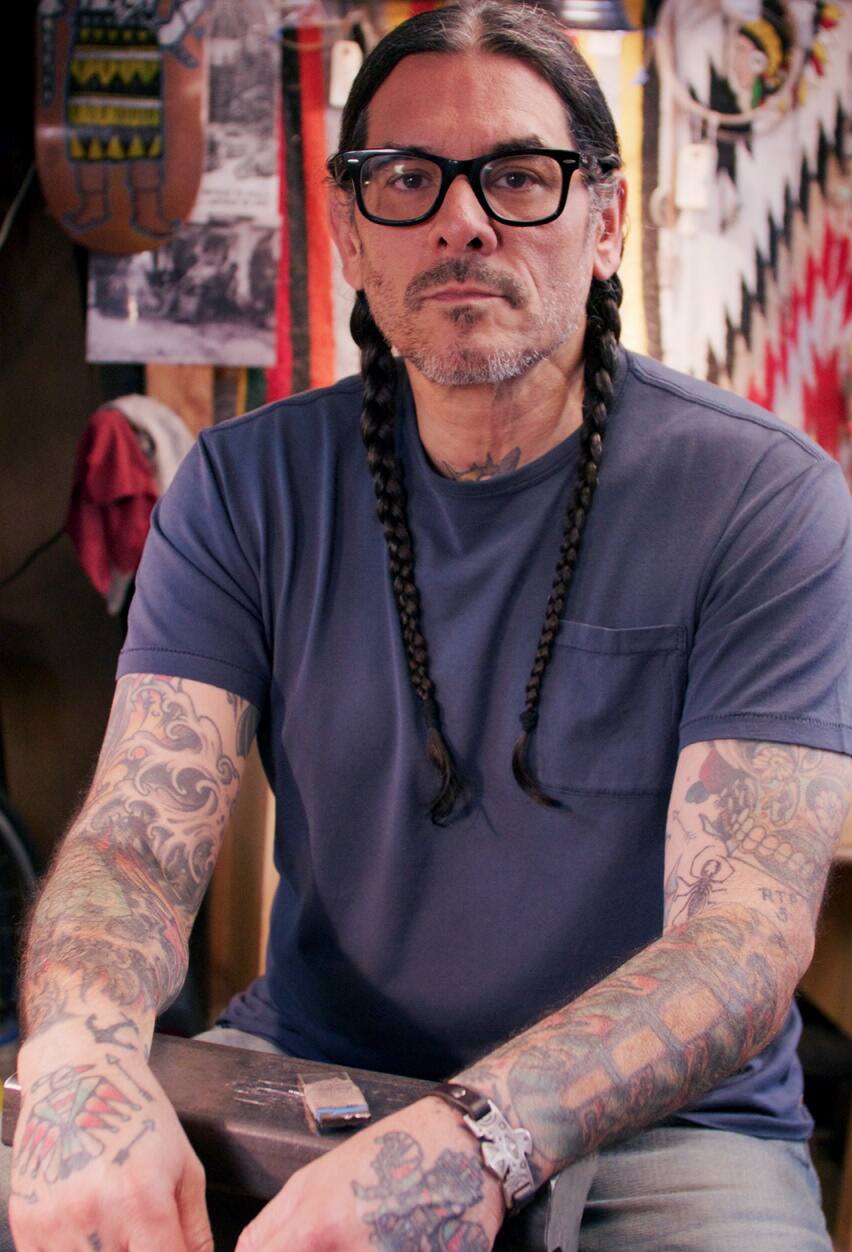
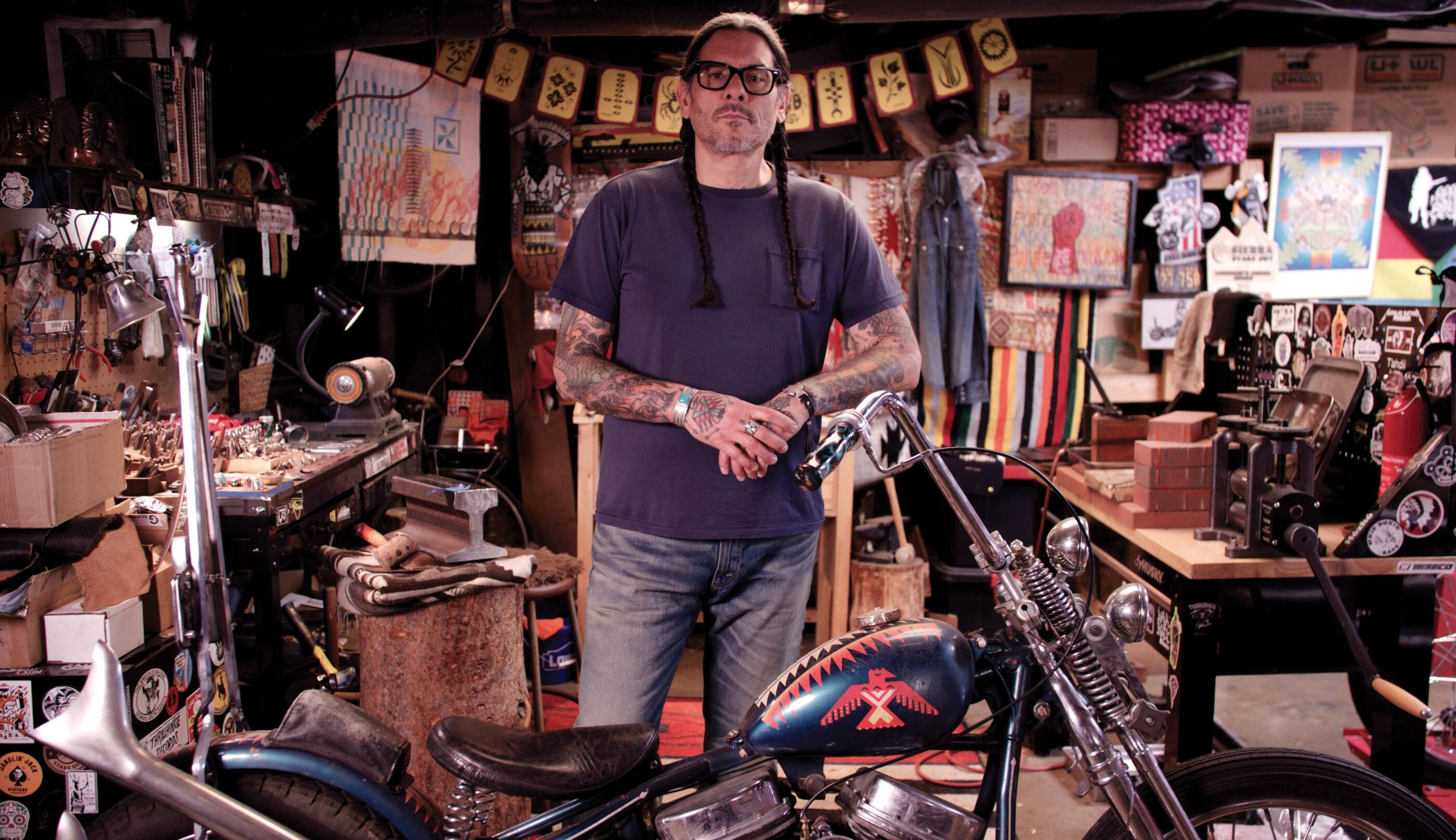
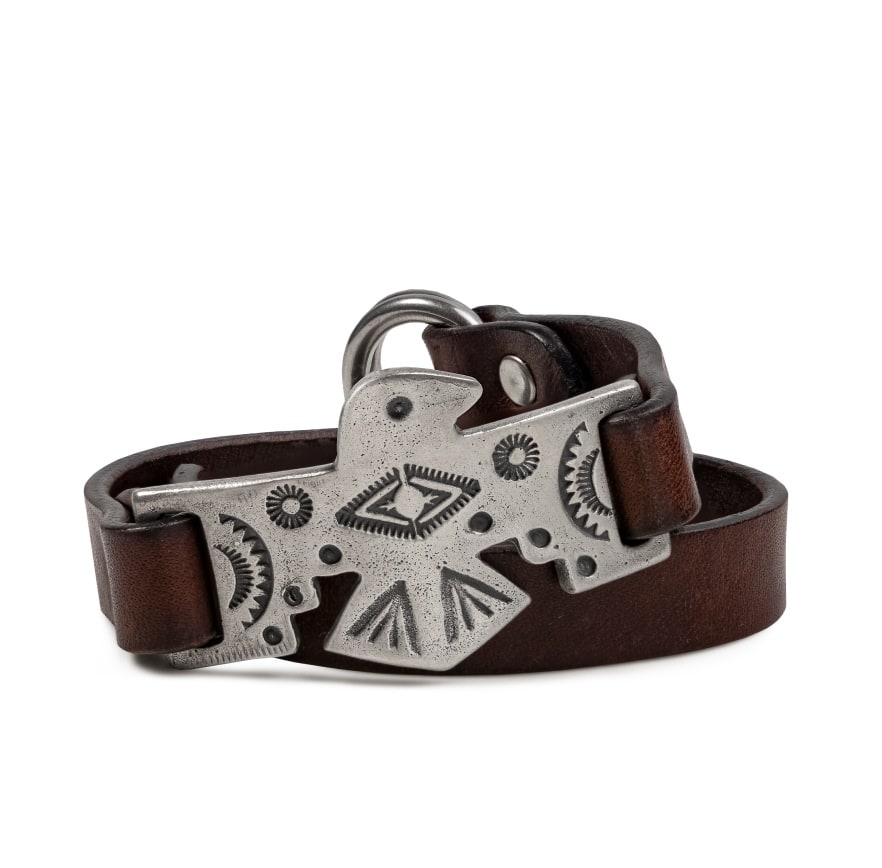
Zarama, top, in his chopper and silversmith shop, which is located in San Francisco’s Excelsior District; various pieces from the new collection, which are made with sterling silver and turquoise sourced from the Americas and feature timeless motifs of deep-rooted meaning in Native American culture, such as the thunderbird (power, protection) and the arrow (purpose and perseverance).
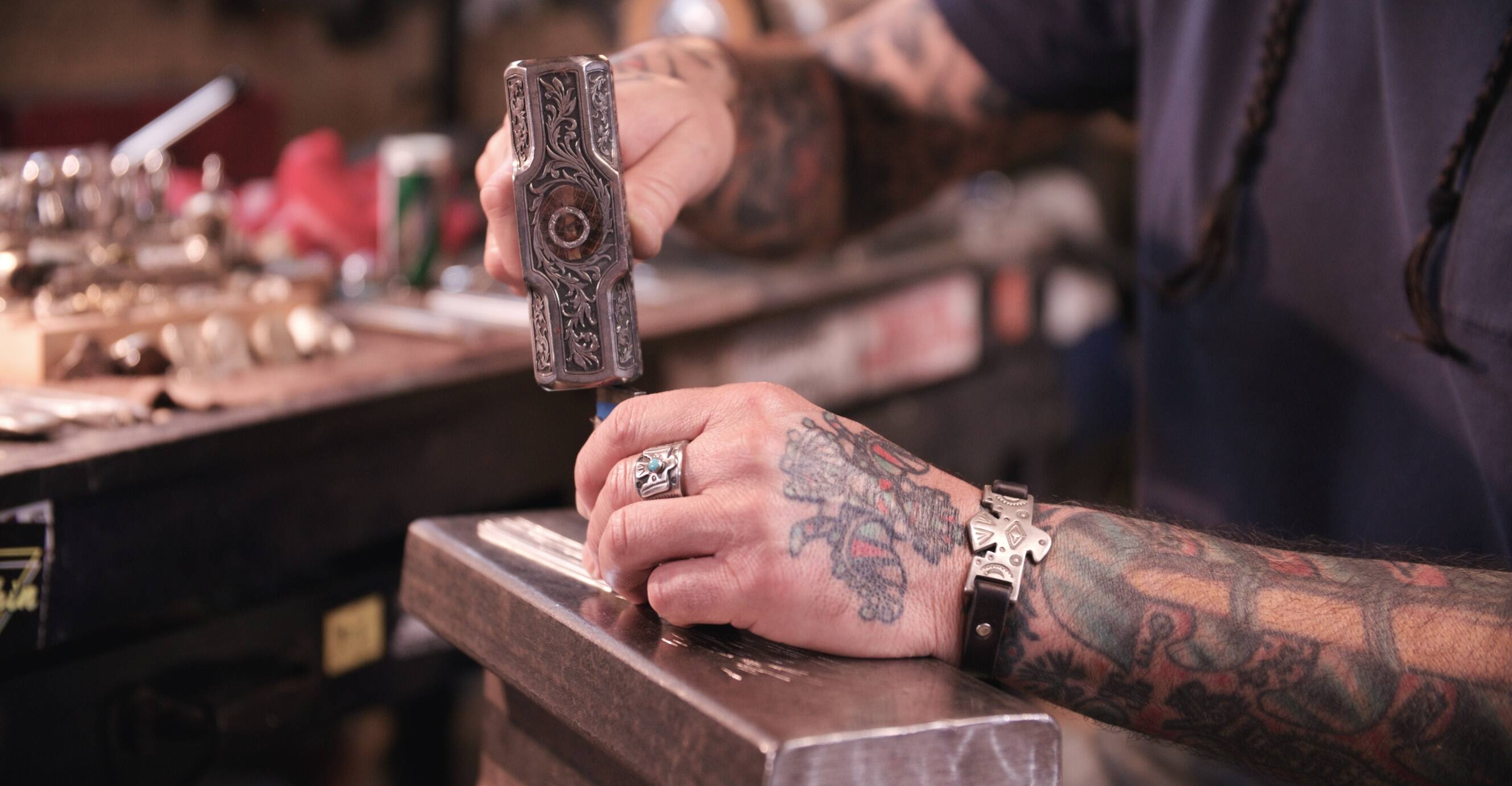
Zarama is a man who has not only lived many lives, he’s also reinvented himself along the way, as he saw fit. It wasn’t until he was 42, matter of fact, that he found out who his biological parents were. And by then he’d owned a record label in the UK, DJed raves in Oakland in the ’90s, and worked with Leapfrog and Pixar making toys and other kinds of educational gadgets. Ran with Silicon Valley guys for a time. It wasn’t until the pandemic that he started going at silversmithing, and jewelry design. Just five years ago. Doing anything for five years doesn’t often lead to such success. I asked him what he thought it was that allowed him to pick it all up so quickly. He said, “Building choppers and working in the garage with my hands always came naturally. But I didn’t level up until Diné [Navajo] master-level smiths pointed out old techniques, which I’d missed in my learning process.” Ten years before that was when he found out who his dad was, a Chiricahua Apache man he’d never even known about. Despite having grown up loving powwows and having Native friends—San Francisco was like that, you could experience all walks of life, become friends with almost any kind of human—he didn’t know he was Native. But even in a dense and storied city like San Francisco, hearing Neil Zarama tell me his story felt singular, and new. Born in San Francisco, in 1969. His parents met there in the Summer of Love. She was a German girl, 15, from the Central Valley, and his dad, 19, grew up on the reservation. His mom wouldn’t know until decades later, but his dad had ended up doing time. She went to live for a while in a home for unwed mothers. Neil was adopted by a Colombian family. That, to him, is and always will be his real family. He made that clear. He took a DNA test. Knows where his blood comes from, knows who raised him. I tell you these facts knowing that on paper they might sound sad to the average reader. But the way he delivered them was with exuberance, reiterating, as he spoke, that he had the best family he could have asked for, the most awesome family, the most awesome life. I had the sense that Zarama didn’t want his life to start sounding like a trope, just because of the circumstances. I had the sense that he’d lived enough of the good and hard parts of life to be on the other side of it looking back, knowing a thing or two.
It wasn’t until the pandemic that he started going at silversmithing, and jewelry design. Just five years ago.
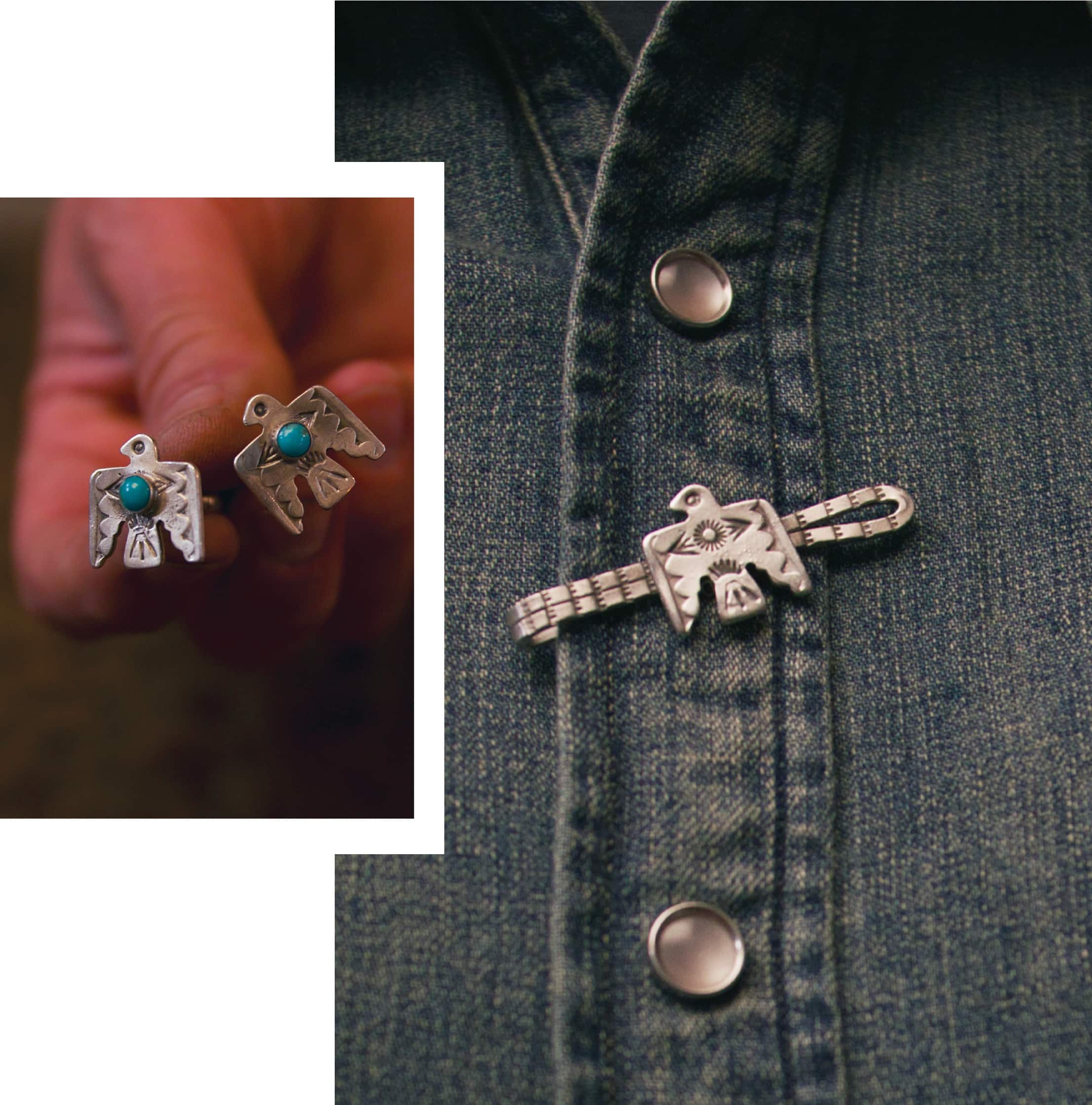
He’s just eight months out from thyroid cancer surgery. Still hard at work. Seeing him in his space, you can tell he keeps his hands full. Is passionate about what he does. He works out of the garage of his home in the Excelsior District. Inside the garage it’s somehow messy and elegant, as everyone who lives and works in these smallish homes in the area must have to figure out. In all his pieces, from cuff links to gear shift handles, you can see a clarity of vision, a reaching back to old design, but a minimalism that feels modern. Zarama said, “Although I am of Apache blood, I owe everything I know to the Diné silversmiths from the late 1800s and early 1900s.” The look of modernism borrowing from the traditional is not new. It happened during the Art Deco period, with its future-forward aesthetic; Southwest designs became so popular there was a subgenre they called Pueblo Deco. Given how many literal Indigenous icons are wearing his pieces in movies, in fashion shows, on Instagram, I don’t think it’s a stretch to say Zarama’s style has become iconic. And it’s no small thing to have Indigenous actors wearing the artwork of other another Indigenous artist working in the same time, much like there are now shows written, directed, and run by Indigenous people. This is all unprecedented, and there is much work to do in the same spirit. Native patterns have a long history of being stolen and repurposed by people, organizations, nations, and corporations. For several years now, Ralph Lauren has been inviting Native artists to collaborate on special collections as a way of honoring the heritage of these designs and to properly support and credit their work. Those who not only design but manufacture what they create are part of the company’s Authentic Makers program, and Neil Zarama is the latest to take part, already making changes in the world in his own right. He is an artist at the top of his field, with a long road ahead, and a decked-out chopper to ride it.

Tommy Orange is the author of There There, a novel that was a finalist for the 2019 Pulitzer Prize.