The authentic and timeless world of Ralph Lauren
November 2025
RL/Culture

Boot Camp

Cowboy boots are a worldwide symbol of freedom and adventure—and anyone can wear them. So, why was the author so conflicted?

By Shannon Adducci
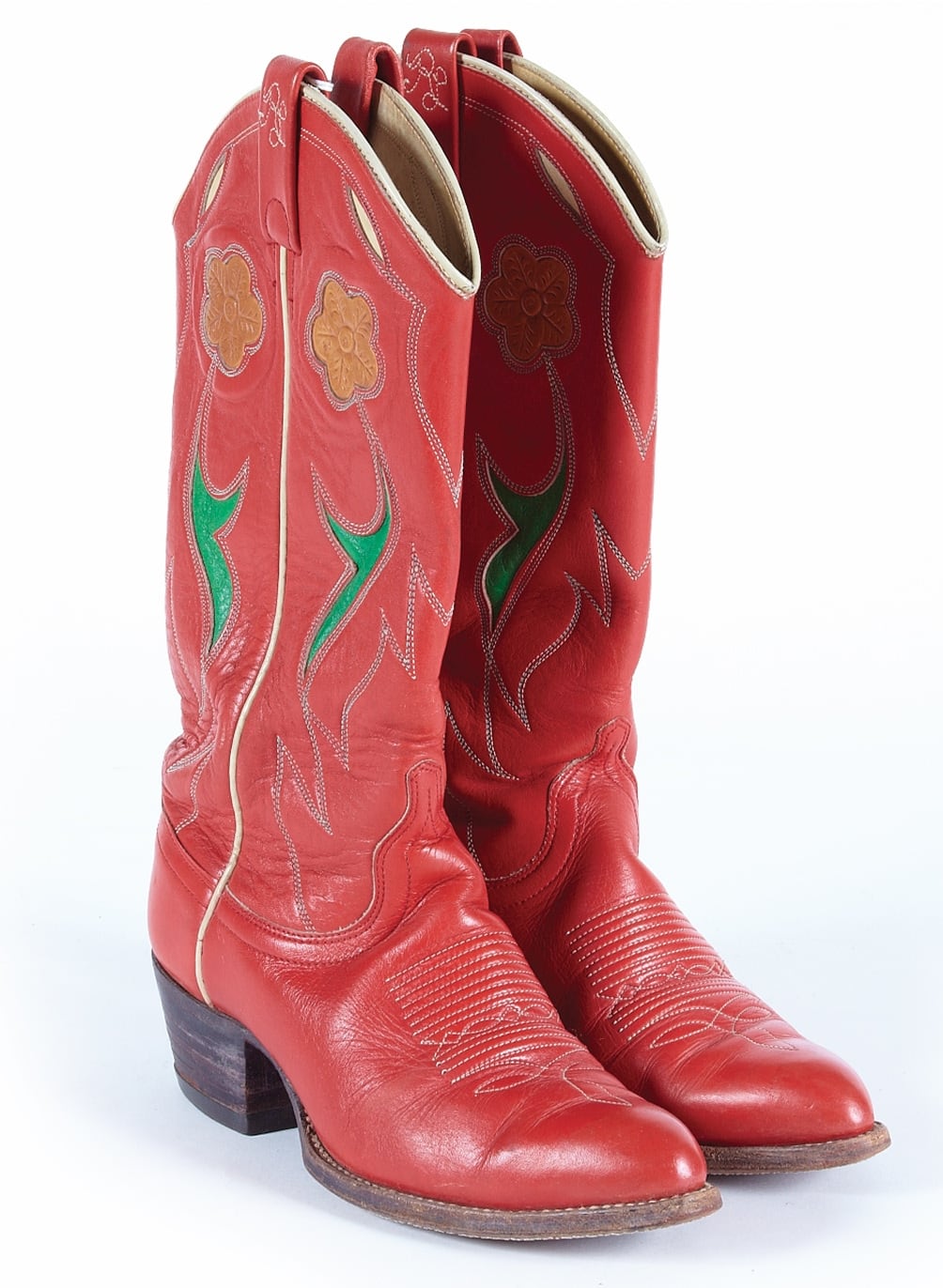
I was 7 years old when my grandfather, Doc, took me to buy my first pair of cowboy boots. We went to the Home of Economy in Williston, North Dakota, the kind of shop that sold horse feed, saddlery, and tractor parts next to denim workshirts and cowboy hats. The selection of boots sat in their own section, options displayed in rows along a faux-wood–paneled wall; in the middle of the room sat those benches with slanted mirrors attached to them for trying on. At the time, while growing up in suburban Michigan, my style preferences leaned toward what Madonna might have worn, or something I had seen in my grandmother’s copies of Vogue. I chose a pair of Tony Lamas, in bright red leather with Western stitching, very much the color and look of the time, when the ’80s drifted into the early ’90s.
The boots were flashy, a conspicuous look for Williston, the small oil town on the border of Montana and Canada where my parents grew up and my grandparents have resided since the 1960s. The town—which sits at the upper end of Lake Sakakawea, where the Yellowstone River meets the Missouri and canyons meet prairie—is rooted in a pioneering mindset, born from the homesteading of the late 19th century. Immigrants, mostly from Scandinavia, moved to the area in the late 1880s, armed with a hardy work ethic and the ability to endure bitter cold and isolation; their dream was to make a home on fertile but rugged farmland that no one else wanted at the time. Today, Williston is better known as a boomtown. Oil and gas workers trickle in to spend months on end working the oil fields before heading home with a big paycheck. The transience breeds an all-work, no-play mentality. Western or country attire is worn purely for function, without any irony. Style is usually an afterthought, or accidental. Anything that is considered luxury, even for those who can afford it, is still often seen as frivolous. My grandfather never shared this view.
Cowboy boots, as it turns out, can be found anywhere, cutting through cultures and geographies like a mountain vista on a prairie of high grass.
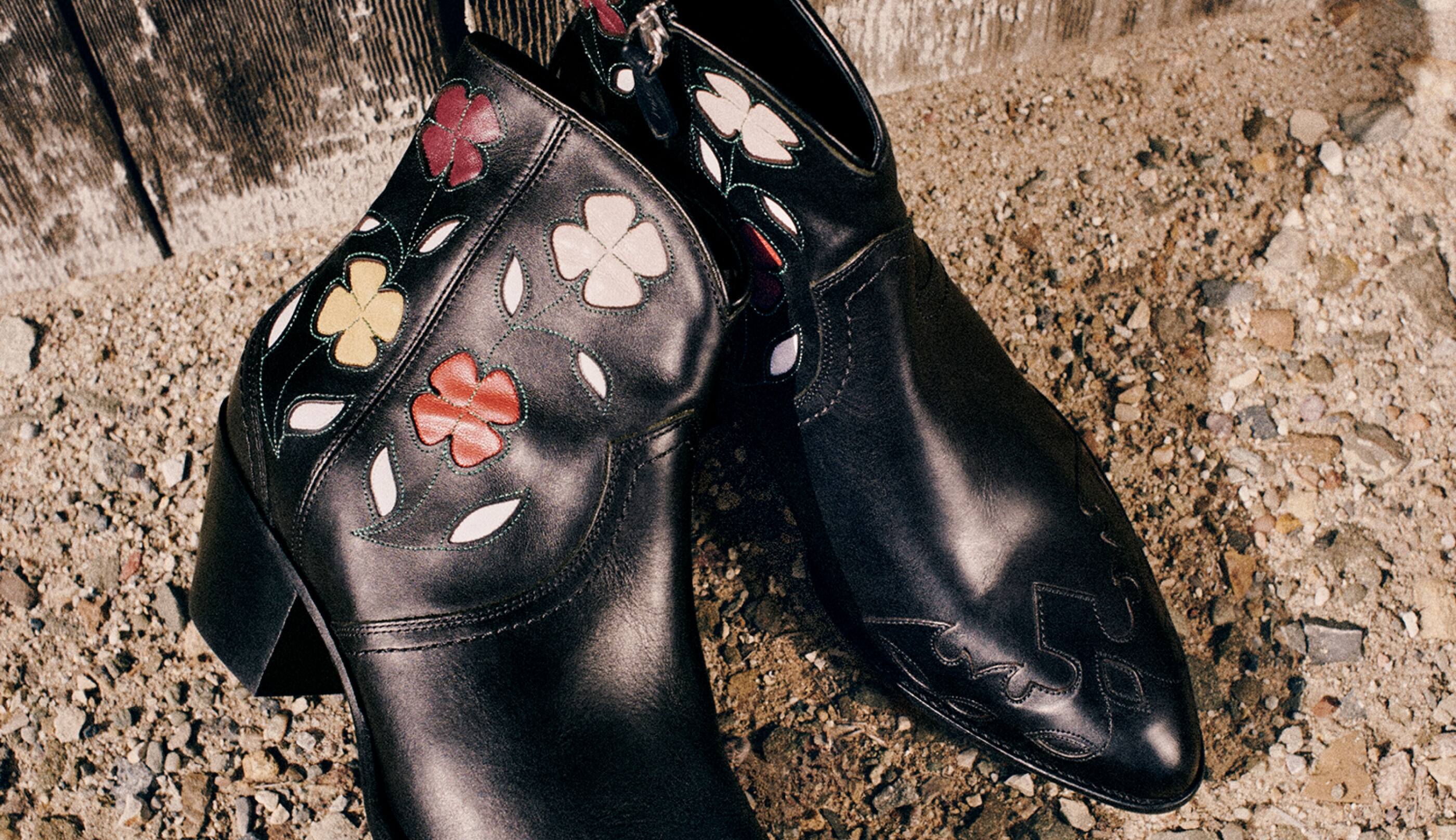
“Good choice,” he naturally said, as I admired myself in the mirror, feeling like a bona fide Material Girl. Doc had made his way from the South Side of Chicago to practice medicine in Williston, which was in need of a board-certified OBGYN. As a city transplant, and the only Italian American in town, he stuck out; a real-life urban cowboy in a different kind of spaghetti western. Doc likes to wear sterling silver belt buckles and bolo ties (some Navajo, others from the nearby Lakota tribes) with leather or suede sport coats and vests, and slick Cuban heeled boots; more Dallas than the Dakotas, a mismatched shade of “country” for the northern state. Yet my grandfather’s city-boy-goes-country look is entirely his own. It was from him that I learned the power of a pair of cowboy boots—they can blend in, or stand out, depending on how (and where) you wear them. Practicality taught me something else: My red boots were too fancy to have much use on the family farm, where we rode horses and wandered the low coulees of the landscape. In fact, I barely got to break them in before they no longer fit and found their way to the donation bin. By then, I was on my own journey of learning about the transformative powers of fashion, how much it can amplify or obscure one’s background, or present you with a clean slate. I believed in the idea that you are what you wear. And my ambition was to live in New York City, not North Dakota. Decades passed before I thought about that afternoon at the Home of Economy again. By then, I had become a fashion editor in New York. I had spent my entire adult life avoiding anything that looked country—I was a city girl whose lifestyle and wardrobe had no room for rusticity, or cowgirl cosplay. Or betraying my own heritage. Cowboy boots, even at their most elevated, evoked that prairie-land austerity of those childhood visits, and I wanted nothing but distance from that world. But a footwear malfunction a few years ago—in Paris of all places, and during Fashion Week—suddenly brought me back. With blisters on my feet from days of running to and from my hotel near the Place de la Madeleine in a pair of fancy ballet flats, I found myself pulling on a pair of sturdy, dependable black leather Western boots that I had packed on a whim, for reasons I still can’t explain. Stepping out made me at first acutely aware of how American I looked, despite my efforts to disguise them (tailored jacket, a pair of wide-leg blue jeans, only the snip toes of the footwear peeking out). Until I realized how many Parisians were wearing them, too—in their own personal way, like my grandfather. Cowboy boots, as it turns out, can be found anywhere, cutting through cultures and geographies the same way a mountain vista or farm on a prairie of high grass does. Now, wherever I am, all I have to do to feel at home is click my Cuban heels.

SHANNON ADDUCCI is a writer and editor based between New York City and the Catskill Mountains.