The authentic and timeless world of Ralph Lauren
November 2025
RL/Culture

Mile Markers

Once you see the West from the backseat of a station wagon you’ll never be the same again.
By Michael Hainey
We headed West in the summer of ’73. The Badlands. The Grand Tetons. The Dakotas. There was nowhere we didn’t try to go, nothing we didn’t try to see. It was the neighbors’ idea. “Have the boys ever been out West?” they asked my mother, who was raising my brother and me on her own. Paul and Carol were their names, an older couple in their 60s, and after our father had died a few years before, they stepped into our lives, taking roles that were somewhere between surrogate grandparents to my brother and me, and best friend to my mother. “Your boys need to see the West,” Carol said. “We’re headed for Montana, going to see some friends. You should come. Time out West changes a boy for the good.” I was 9 that summer, my brother was 11, and a week later, the five of us found ourselves piling into a rented 1972 Chevrolet Impala wagon, Paul steering us onto I-80 and leaving the flatlands of Chicago behind, speeding towards the Mississippi River, then crossing over into the great wide open, where we rumbled across the prairies, passing vast swaths of farmland and their small houses with the porch lights aglow on the horizon, toward the Rockies and beyond. We drove a thousand miles in two weeks, Nebraska to Yellowstone; Wyoming to the Dakotas, with endless stops in between—like Alda, a speck on the map where we could touch ruts cut deep into the hard soil by the wheels of Conestoga wagons carrying Eastern dreamers to gold-rush California, in 1849. Or the Badlands, where my brother and I roamed windswept hills in search of arrowheads but found none. We didn’t care. So many adventures, large and small. Ghost towns in Colorado. Face to face with Mount Rushmore. A rodeo under the moon in Wyoming. Ice cream at Wall Drug in South Dakota.
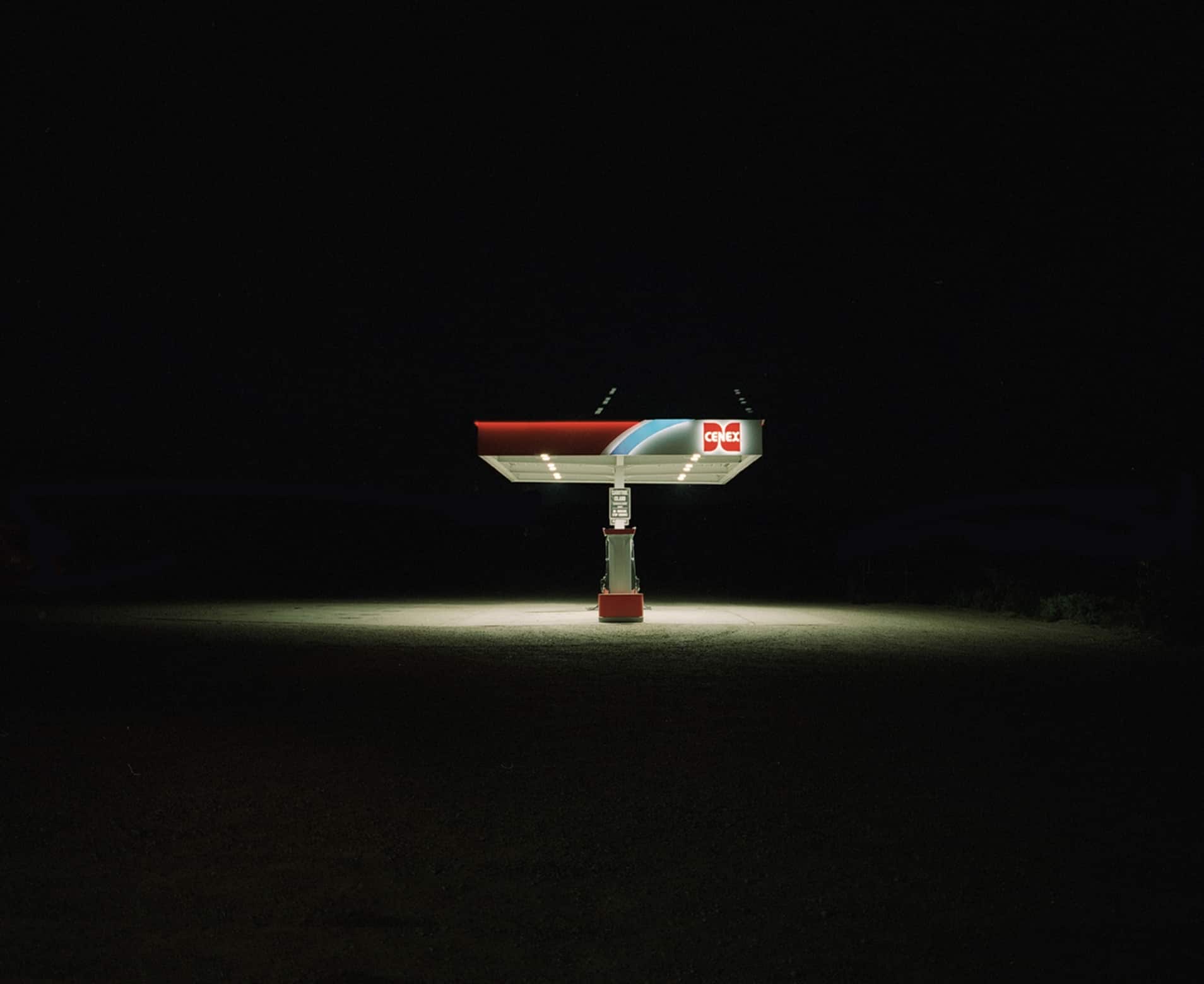
We rumbled across the prairies, passing vast swaths of farmland and their small houses with the porch lights aglow on the horizon, toward the Rockies and beyond.
And then there was the afternoon in western Montana, on the wheat farm of Billy, Paul and Carol’s friend, where he asked my brother and me if we wanted to help him bring in the harvest. As I rode with him in the cab of his great, lumbering combine, he eased it to a halt and smiled and told me to hop into the bed of the old dump truck that trailed beside us, where it caught an endless stream of thrashed grain. I jumped into the pile, and at once I found myself on my back, staring up at a sky that was a blue I’d never seen before, as grain rained down on me. Decades later, there are nights, still, when I return to this memory. A way to calm my mind. Yet, as I look back, I see my memories of that road trip are about something more than where we went; they are about what we drove. Because road trips, particularly out West, are not just about the landscapes you move through, it’s what you drive as you do it. Maybe even more. It’s the car that frames so much of our journey and our experiences. My mother and brother and I still laugh about that ’72 Impala wagon with its green vinyl seats, where we listened to cassettes of Neil Diamond and John Denver, and where my brother and I took turns crawling into the cubby hole in the way-back that we had carved out—a snug space between the suitcases and a cooler where we curled up and read copies of MAD magazine. We laugh, too, about the night we almost ran out of gas on a lonely stretch of highway on our way to Casper, Wyoming. That was the summer of the gas shortage, and we coasted into the parking lot of our Holiday Inn just before midnight, only fumes to spare. As Paul killed the engine and slapped the dashboard with relief, we all tumbled out of the car, and let out hoots of thanks—“Thank you, mighty Impala!”—our words soon swallowed by the darkness beyond the parking lot lights. As a writer, you learn that place is character. But our cars are characters, too. Is it any wonder we name them, like a boat or a horse. When John Steinbeck made his epic drive from Sag Harbor to Monterey and back that he chronicled in his treasure of a book, Travels With Charley, he bought a GMC pickup, rigged it with a camper top, and christened it Rocinante, after Don Quixote’s trusted steed. We all get inspired by road trips, imagined or real, and the cars people used. How many of us still dream about bumming a lift with Dean Moriarty in his 1949 Hudson Commodore from On the Road? Or calling shotgun in the 1966 Thunderbird that was as big a character as the women who drove it in Thelma and Louise. Paul and Carol were right—time out West changes a boy for good. But probably everyone, I would bet. Once you make a road trip through those vast, magnificent spaces, it’s impossible to see the world in the same way again. The perfect car does more than take you where you long to go—it leaves you feeling transported.

MICHAEL HAINEY , a writer at large at Air Mail, is the author of The New York Times best-selling memoir, After Visiting Friends.