The authentic and timeless world of Ralph Lauren
November 2025
RL/Culture

NATURAL WONDERS

With Georgia O’Keeffe’s famed New Mexico hideouts setting the tone, Ralph’s new Canyon Road collection taps into the rugged spirit of American artists, past and present.
By Shannon Adducci
O’Keeffe’s Abiquiú residence, including a view to the plazuela, an open courtyard that first drew the artist to the old hacienda. The pathway is lined with Canyon Road’s leather-covered Preston hurricanes.
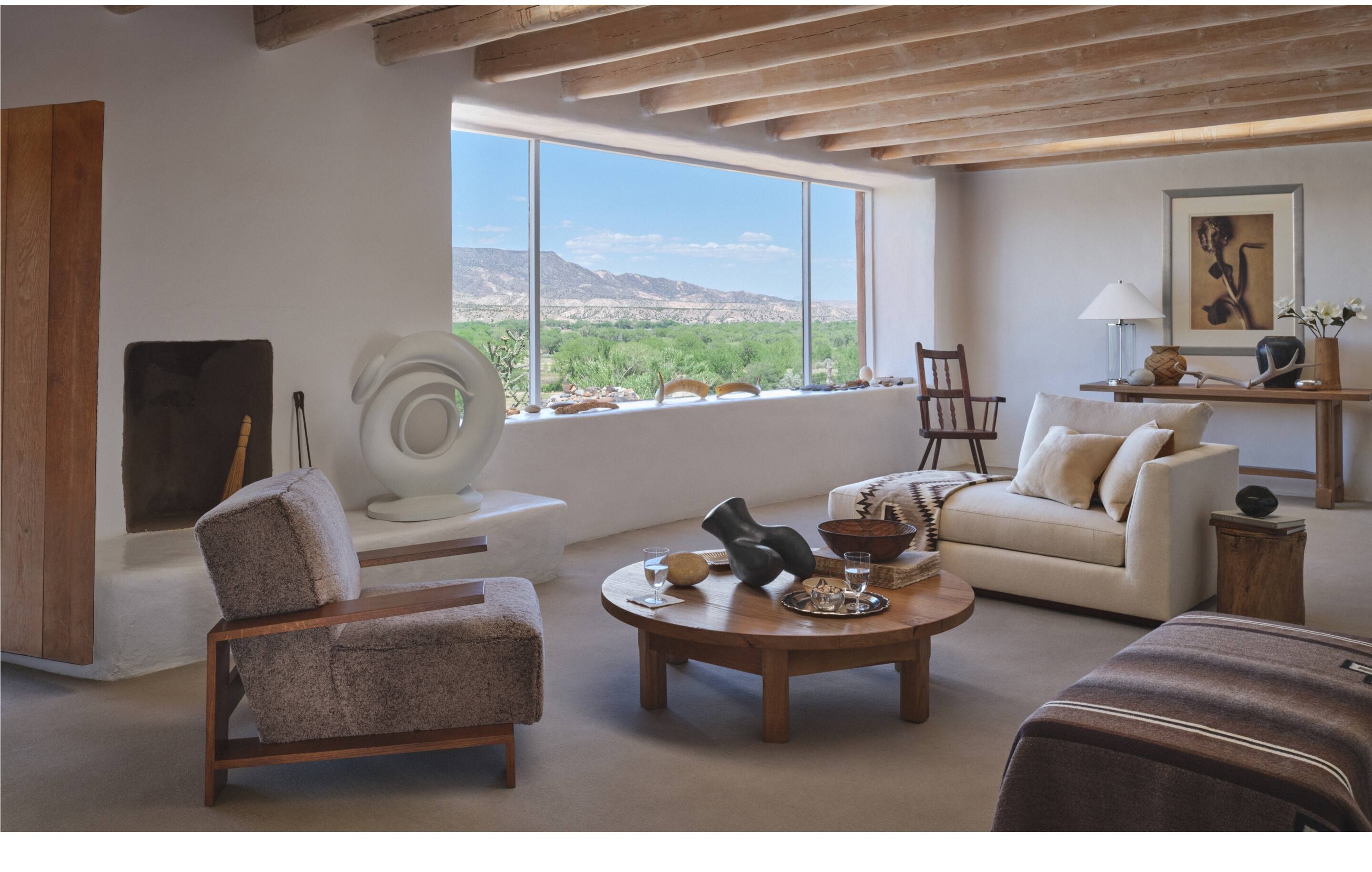
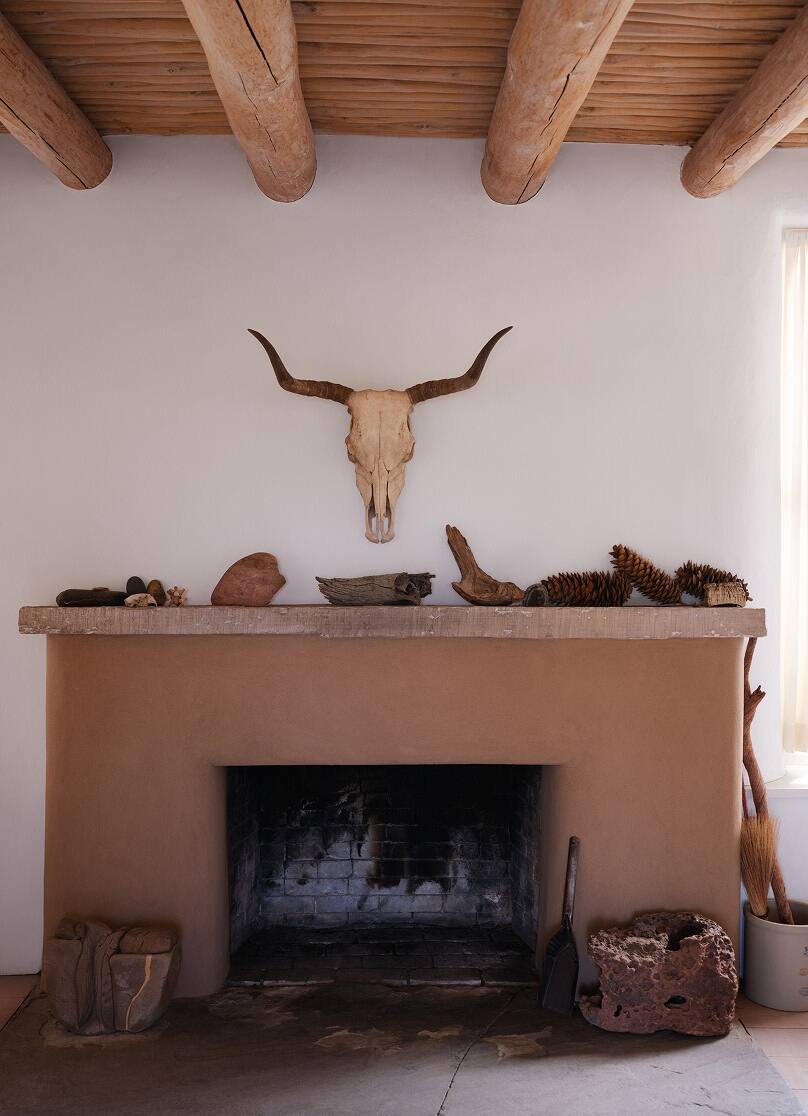
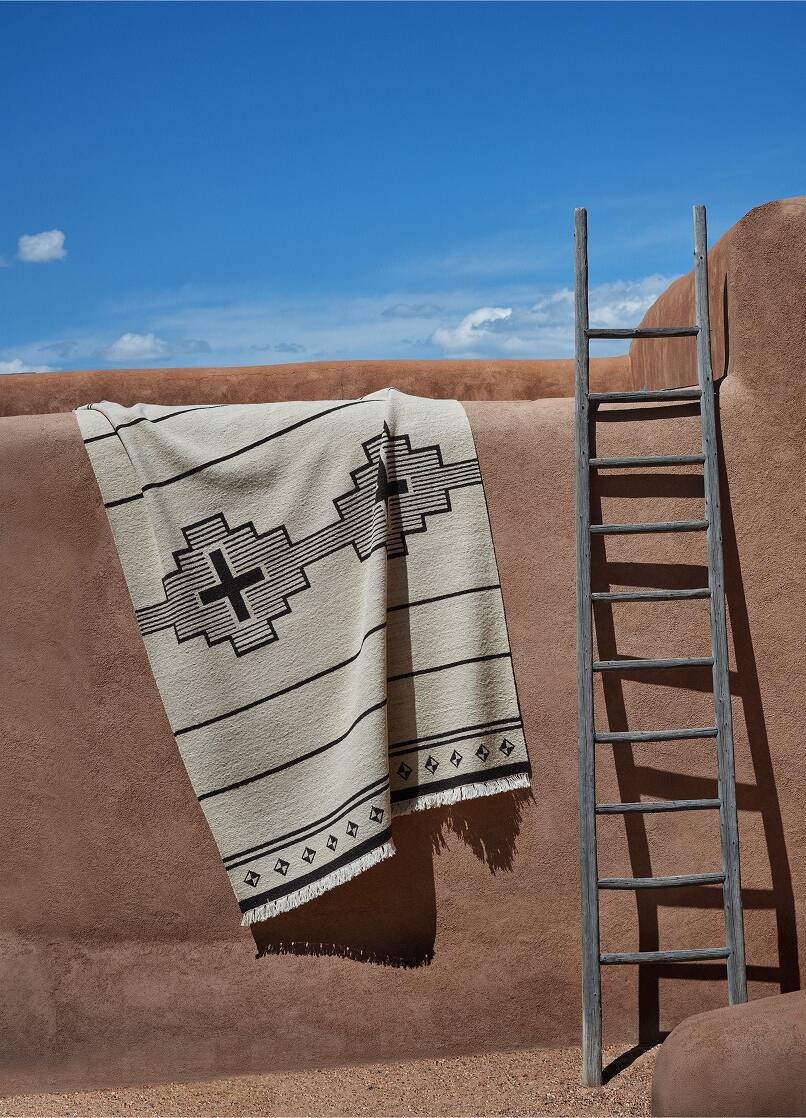
A little more than an hour outside Santa Fe, at a place called Rancho de los Burros, there’s a ladder leaning against the adobe wall of a house. You’ve probably seen it yourself in photographs. It’s the one that Georgia O’Keeffe used to climb to spend nights alfresco on the roof, so at dawn she could get a full view of Cerro Pedernal, the mesa in New Mexico’s Jemez Mountains that appears in many of her works. So, too, does the ladder itself, as a surreal object floating in the sky in Ladder to the Moon (1958) with Cerro Pedernal in the distance below. “As soon as I saw it, I knew I must have it,” O’Keeffe famously said of Ghost Ranch, the property that contains Rancho de los Burros, a cottage where the owner of this former dude ranch had lived. The artist began to rent the house in 1934, purchasing it and its 7-acre parcel six years later, her own slice of heaven, protected by 21,000 surrounding acres. In 1945, O’Keeffe bought an old adobe hacienda in nearby Abiquiú, turning it into her winter home and a second studio. The two properties would become one of the artist’s most influential points of inspiration, shown in opposition as part of her Black Place series, painted in her early years at Ghost Ranch, and White Place works, based on a white rock formation visible from the Abiquiú house.
“Out here, half your work is done for you,” O’Keeffe said of her time spent in northern New Mexico, between Ghost Ranch and Abiquiú.
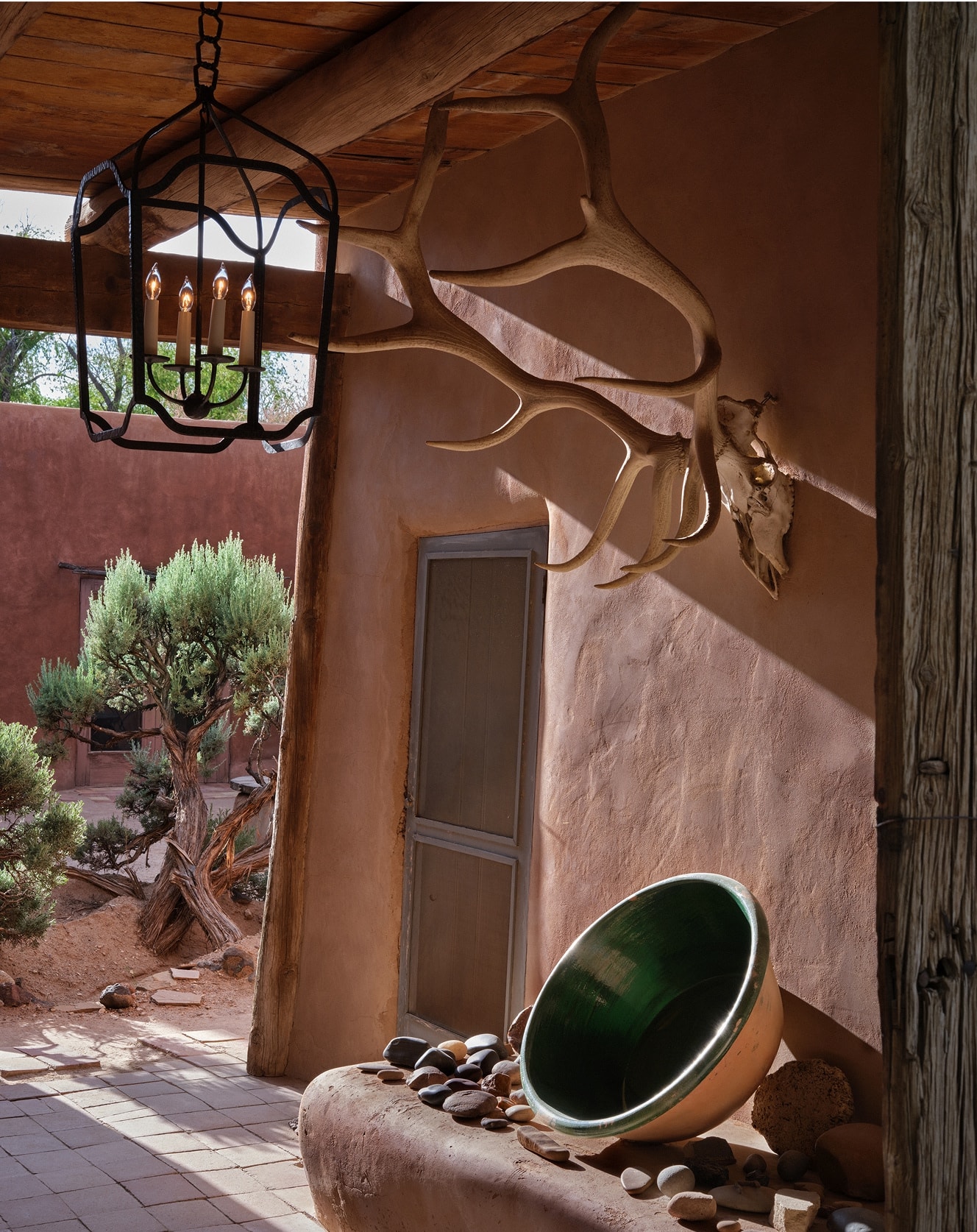
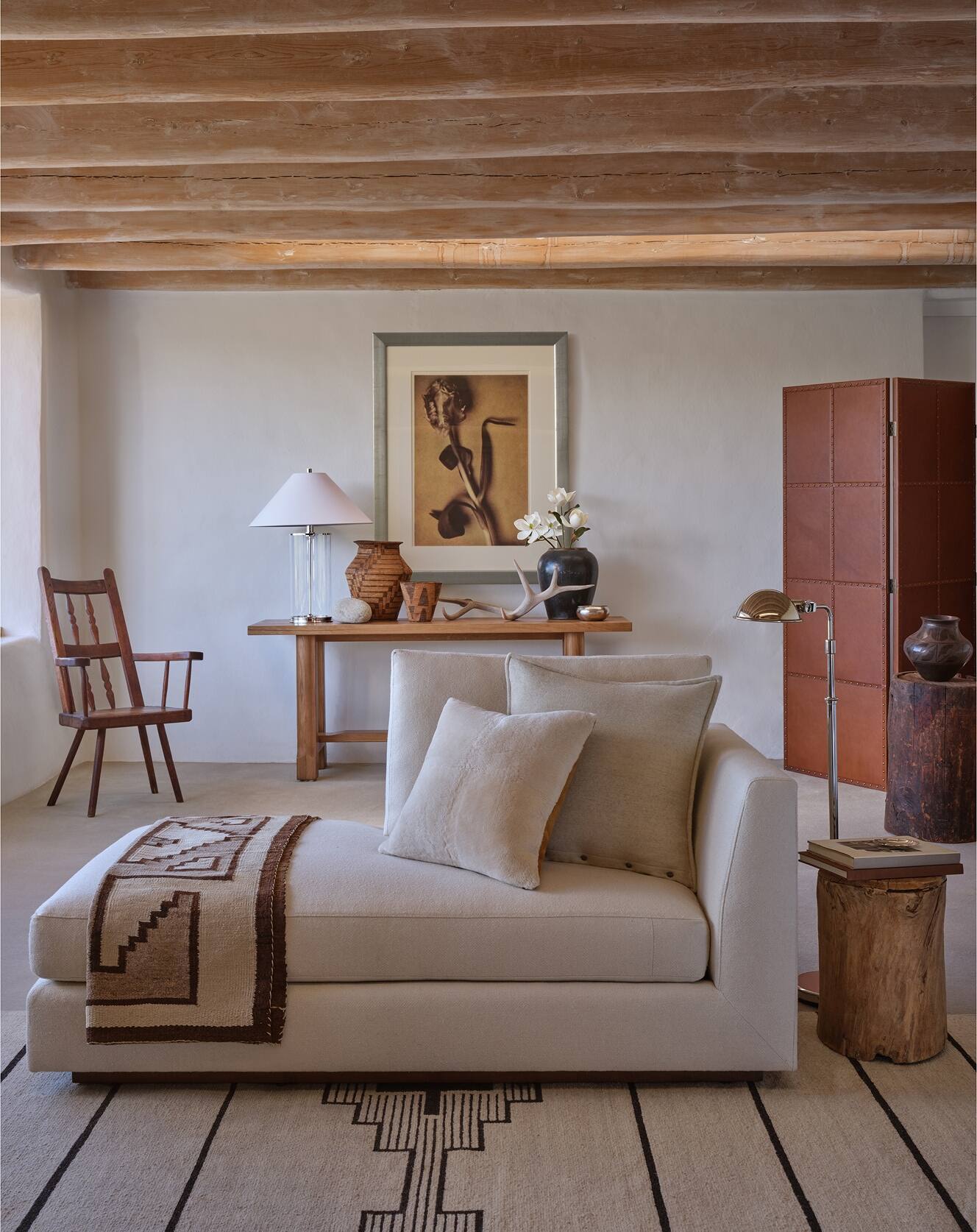
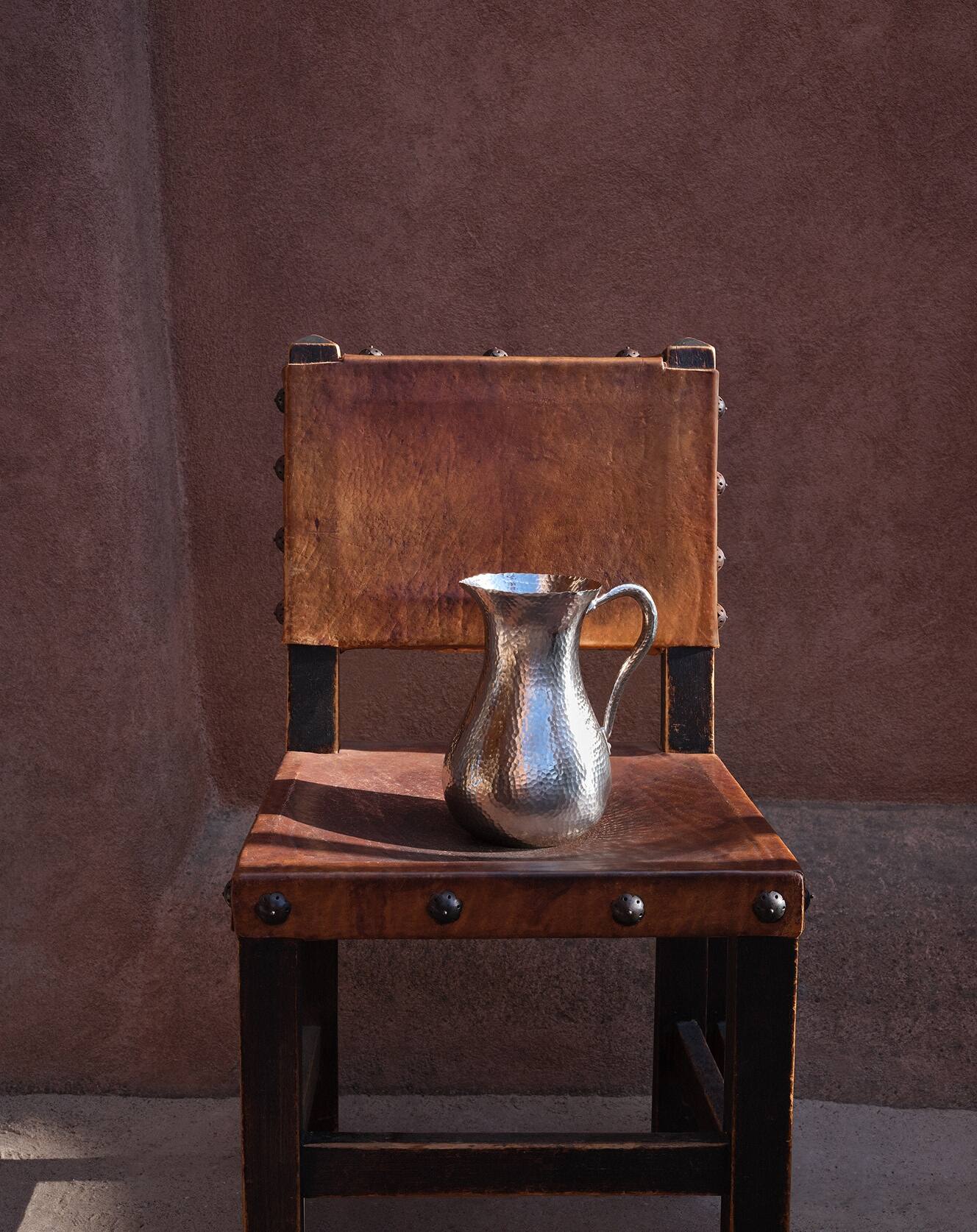
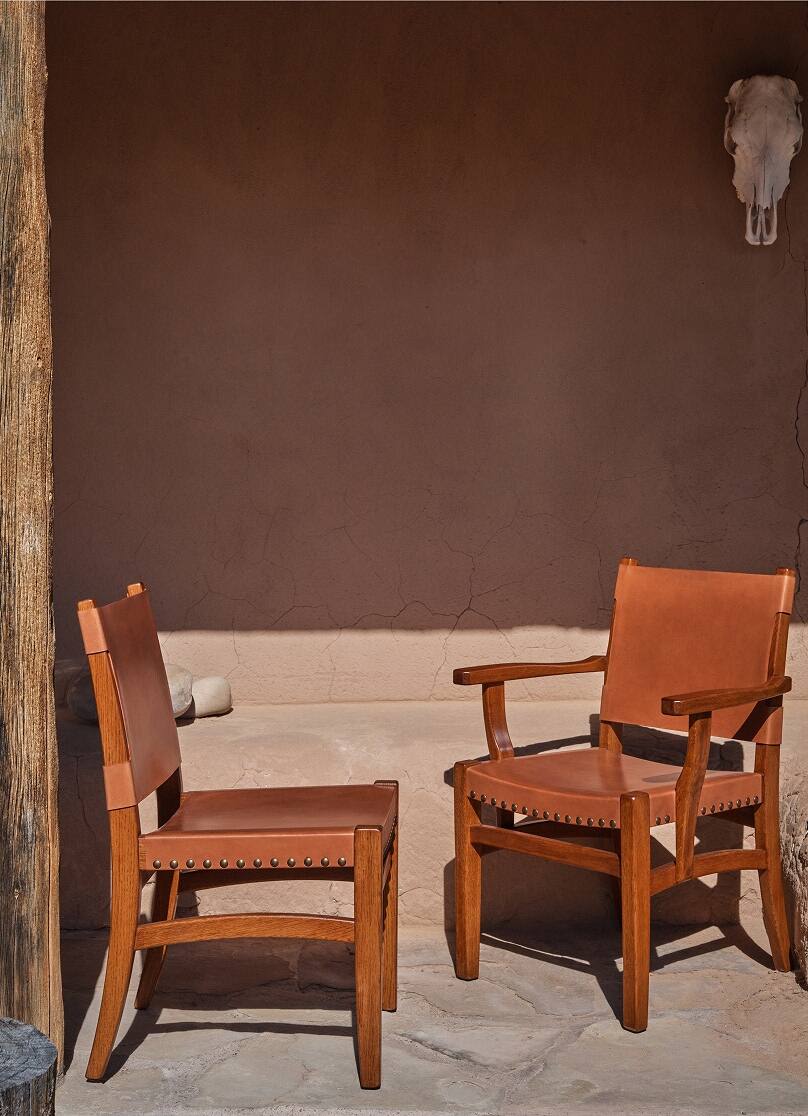
Both Ghost Ranch and the Abiquiú residence are the setting for Ralph Lauren’s latest Home collection, Canyon Road, a multifaceted line of pieces that tap into the rugged beauty of the American West and, more specifically, the dramatic landscapes, earthy adobe domiciles, and contrast of austerity and handicraft that defined the artist’s Southwestern sanctuary. Hand-selected oak and hand-burnished saddle leather make up most of Canyon Road’s furniture, which includes brass nailhead-trimmed side chairs and sturdy dining, console, and cocktail tables done in simple lines that show off the wood’s natural textures. The warm, rustic furniture pieces contrast with homewares such as crisp cotton percale sheets finished with delicate tonal-embroidered botanical borders, and a series of hand-hammered, nickel-coated-brass pitchers and nesting bowls that add a patina to the overall look. “The Canyon Road collection speaks to my longtime love of the American West—the heroic beauty of its landscapes, its unique heritage, and the Indigenous people who have been part of preserving its lands and traditions for centuries,” Ralph says of the collection, which also includes a new chapter of the Artist in Residence program with artist Naiomi Glasses.
Clockwise from top left: Another courtyard scene; inside the artist’s studio, featuring Canyon Road’s oak console table, nailhead-trimmed leather Glenwood screen, and textiles by Naiomi and Tyler Glasses; the Canyon Road leather side chair with hammered brass Evans pitcher; personal ephemera from O’Keeffe.
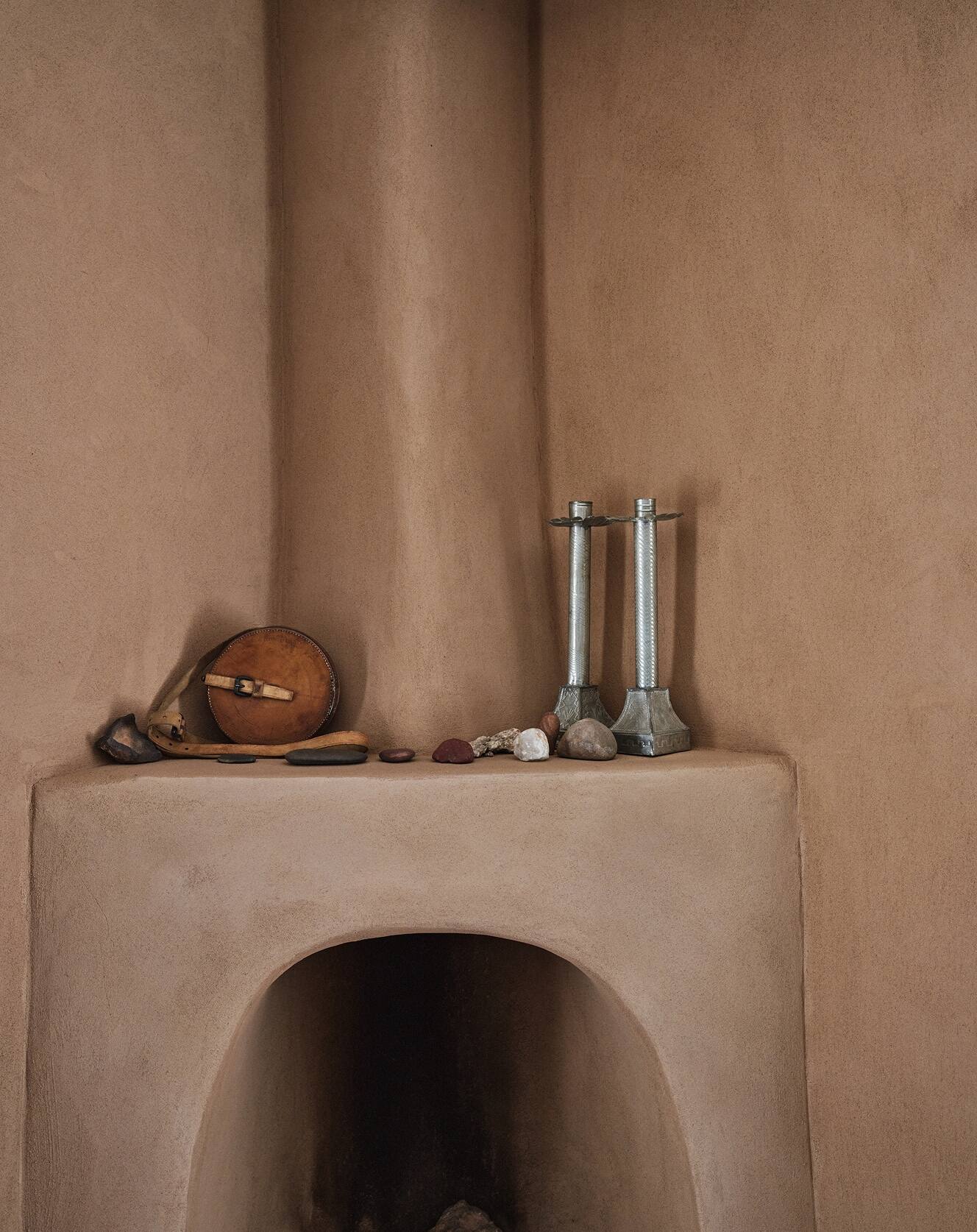
This time, the seventh-generation Diné (Navajo) textile-maker tapped her brother, Tyler Glasses, to collaborate on a line of fabrics, floor coverings, and textiles that incorporate the weaving practices the siblings learned from their late grandmother, notable artist Nellie Glasses. That includes a pillow that Tyler designed, woven with wool and cotton yarns to create variegated stripes—a nod to the rock formations on Navajo Nation—along with “eye dazzlers,” a diamond framed with four-directional crosses (the number four carrying significance in Navajo tradition, referencing the Earth’s four directions and the stars). There’s also Naiomi’s Rena blanket, with Spider Woman crosses, a symbol representing the creator and teacher of the Navajo weaving tradition. Both the Spider Woman cross and the eye dazzler motifs appear on a series of pewter accessories that the siblings also designed for Canyon Road: a serving set, tray, napkin rings, salt and pepper shakers, vases, and votives. They’re displayed with the very rocks that O’Keeffe used to collect, smooth, large pebbles that still sit inside her Ghost Ranch studio.

SHANNON ADDUCCI is a writer and fashion editor based in New York. Her work has appeared in Elle, GQ, Departures, Robb Report, WWD, and T: The New York Times Style Magazine.