The authentic and timeless world of Ralph Lauren
April 2025
RL/Men

A Million Little Pieces

This season’s inky patchwork pieces are a study in the perfection of imperfection
By Eric Twardzik
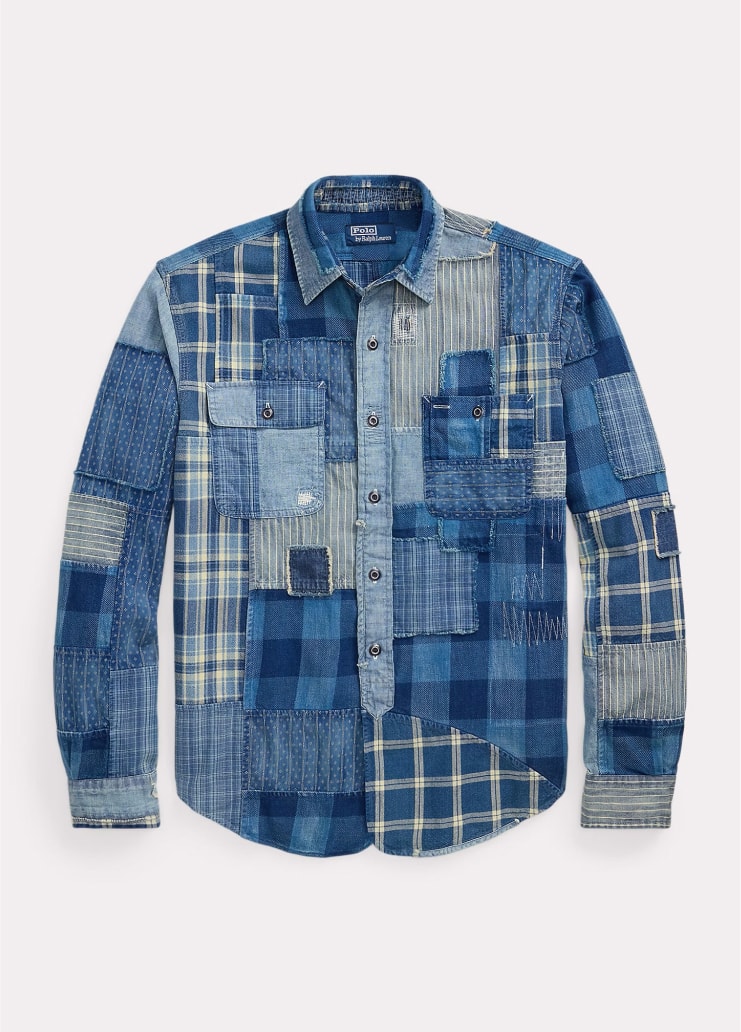
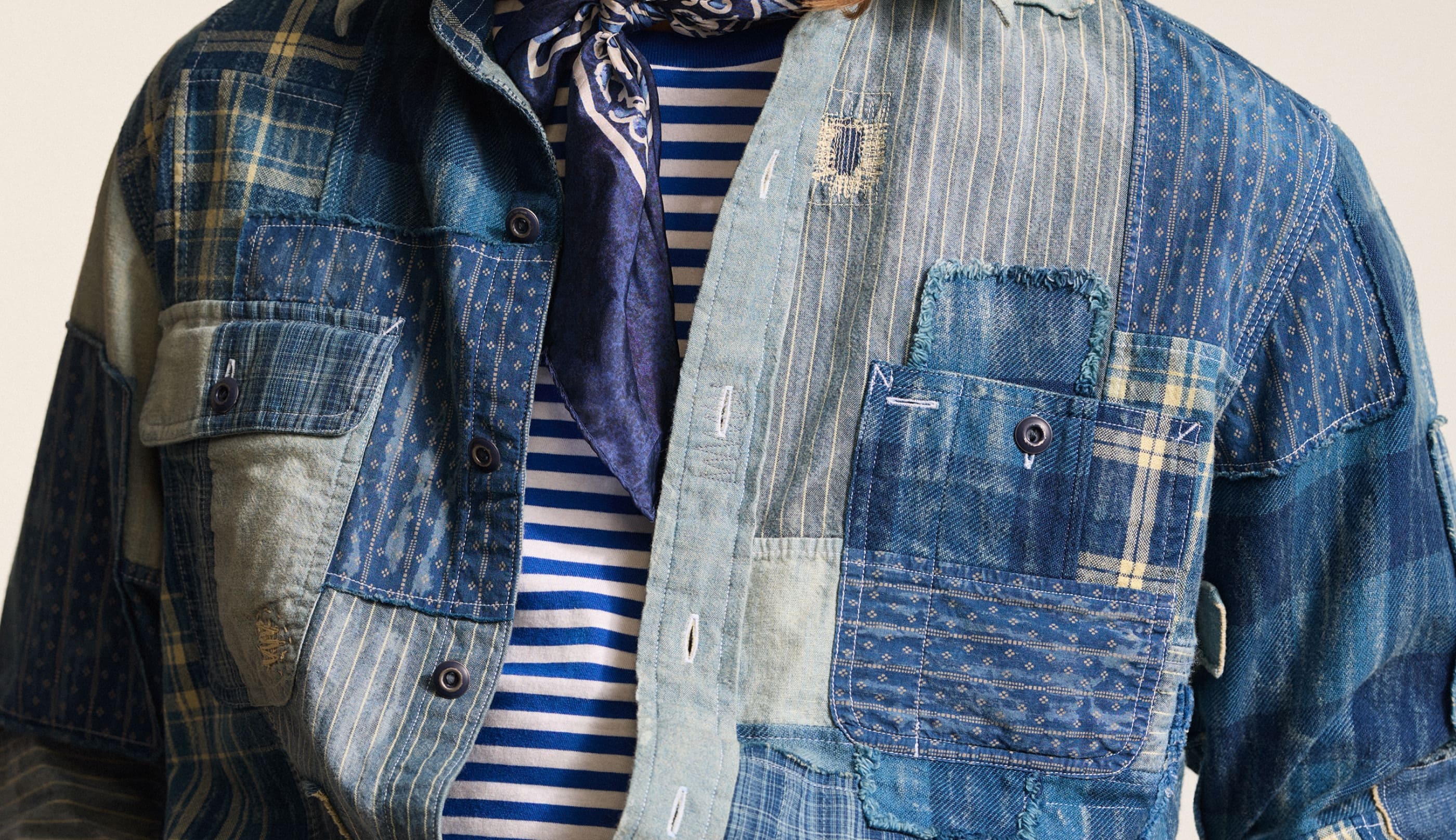
The World of Ralph Lauren is a study in contrasts. Think of the blue double-breasted blazer worn with patched and repaired denim; the distressed leather bomber matched to flannel trousers; or a cropped denim jacket next to a flowing peasant skirt. But nowhere is the playful tension that’s added such richness and texture to the Polo look more apparent than in patchwork fabric, which by its very composition is at contrast with itself. Over the years, Ralph has put patchwork to work in many forms, from preppy madras sport coats to indigo-dyed workshirts reminiscent of the Japanese art of hand-mended boro textiles. But the style ultimately springs from one source: the humble tradition of “crazy” or “cutter” quilting, by which flinty New Englanders would piece together asymmetrical fabric scraps into functional rugs, bedspreads, and clothing to warm their hearths and families.
PATCH IT UP
Above: An Americana-infused patchwork look from the Fall 1982 women's collection. Right: The quilt-inspired Hamlin dress that featured in Ralph Lauren's 50th Anniversary Collection.
PATCH IT UP
Above: An Americana-infused patchwork look from the Fall 1982 women's collection. Right: The quilt-inspired Hamlin dress that featured in Ralph Lauren's 50th Anniversary Collection.
Much like how these homespun creations were later recognized as folk art and added to museum collections, patchwork fabric would in time become glamorous enough to walk the runway. Ralph put it front-and-center in his Fall 1982 women’s show themed around Americana, and featured a crazy quilt–inspired Hamlin dress of velvets and print jacquards in his 50th Anniversary Collection in 2017. If a thing born from wholesome American thrift could somehow weave together sexy, bohemian, and luxury, this was it. “I was inspired by the spirit of these crafts and made folk art sweaters and patchwork skirts and jackets that mimicked the naive designs of these early American art forms,” Ralph has recalled. “To me they were an expression of our American heritage—clothes that were authentic and had a one-of-a-kind sensibility and character.”
“To me they were an expression of our American heritage—clothes that were authentic and had a one-of-a-kind sensibility and character.”
Polo patchwork pieces, of course, aren’t stitched together by a Yankee grandma, but they adhere to a multistep process that is in keeping with the brand’s devotion to authenticity and craft. Designs start out as sketches that indicate where the seam lines of the disparate fabrics will eventually meet. Then the mosaic is carefully filled in with whatever combination of fabric, color, and pattern suits the design best—an exacting approach that achieves that perfectly random pattern only the best patchwork pieces have. That’s not all. Afterward, many pieces are further embellished with hand-finished detailing such as mending marks so that no two are exactly alike.
Indigo French Terry Patchwork Hoodie
CHF 429,00 CHF 257,00
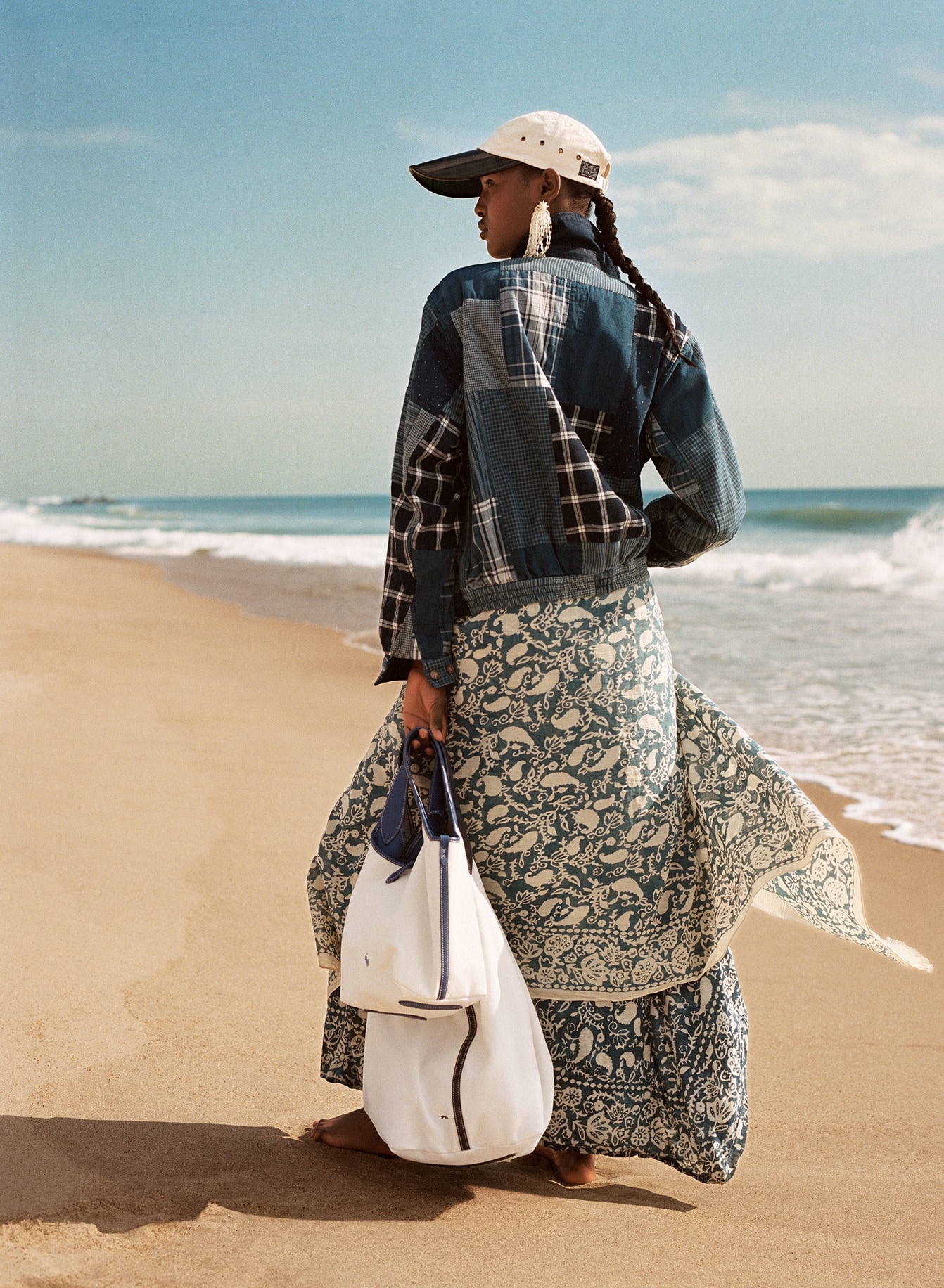
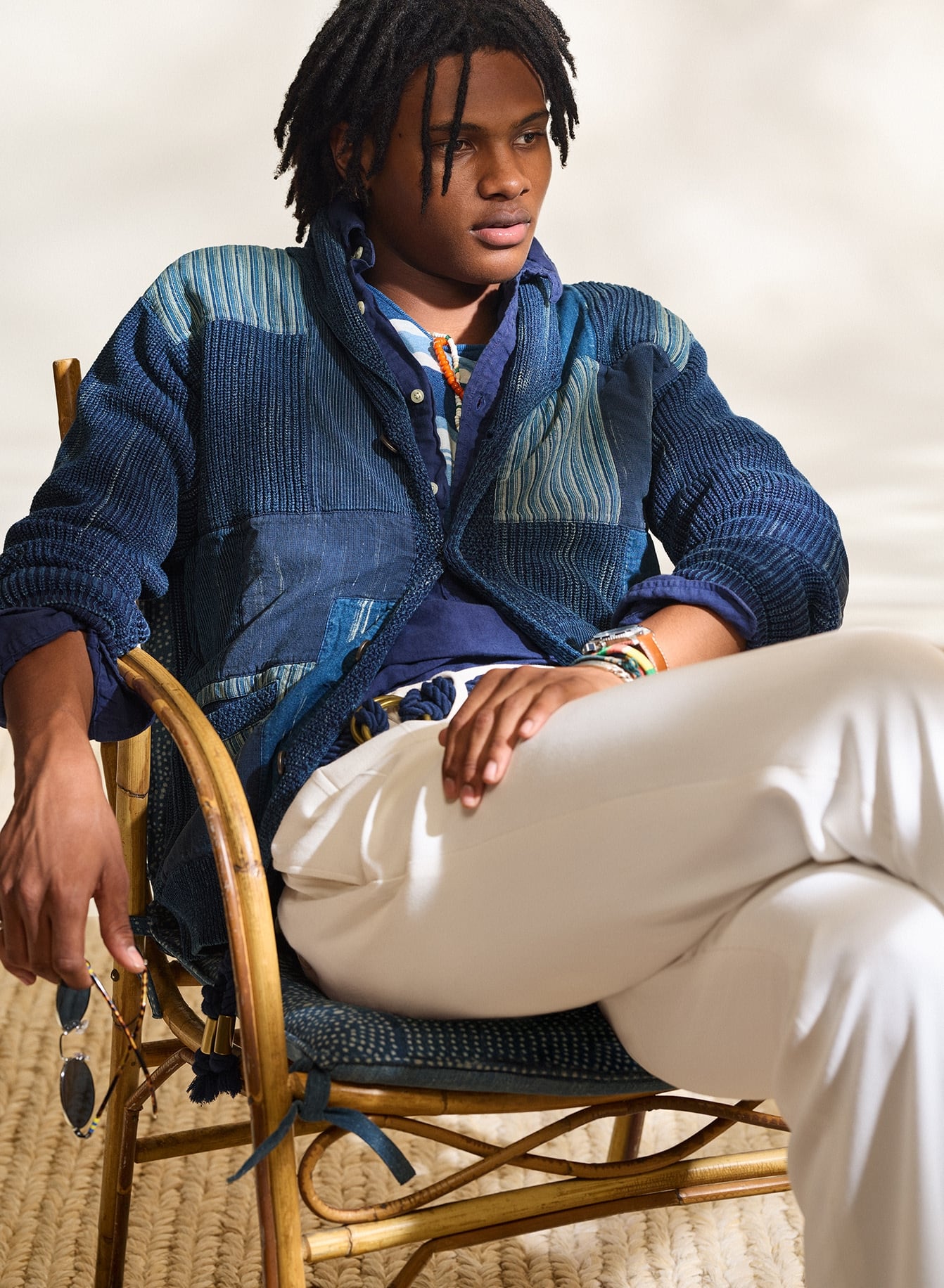
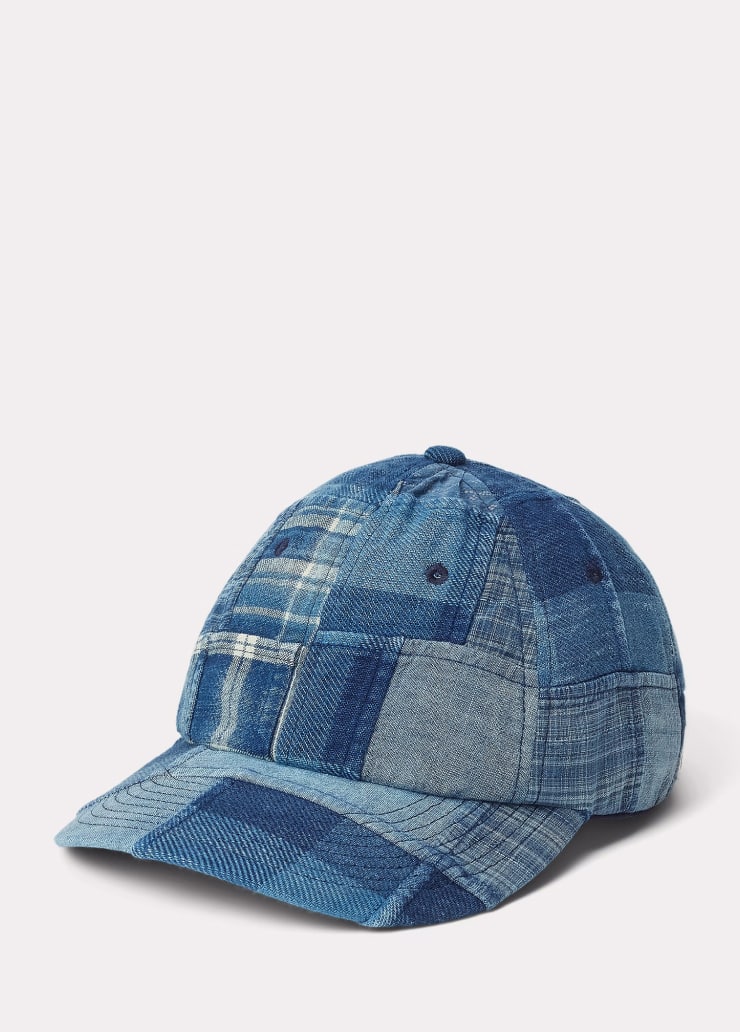
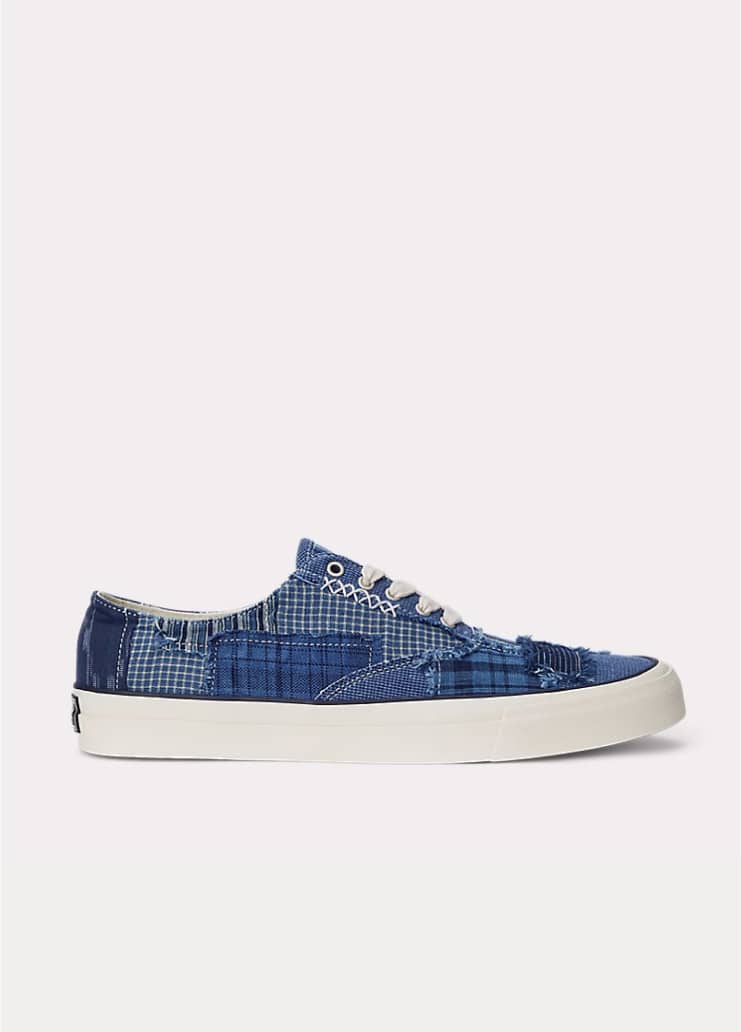
This spring’s assortment of men’s and women’s patchwork garments pays homage to the history and character of the Hamptons—in particular, the fishermen, farmers, and bohemian spirits who have long called it home. Constructed from indigo-dyed fabrics—including denim, chambray, and calico—with blue-and-white hues that signal a nautical inspiration that also calls back to workwear heritage. Consisting of garments that historically were patched up or pieced together (workshirts, skirts, utility jackets, shawl-collar cardigans) and a few other things that weren’t (hoodies, windbreakers, lace-up sneakers), it’s a stylish reminder that patchwork, like any other art form, remains ripe for reinterpretation.

ERIC TWARDZIK is a writer with a deep reverence for things that get better with age, from tweed jackets to single-malt Scotch. He has contributed to titles including GQ, Esquire, and Condé Nast Traveler and serves as deputy editor of Wm Brown magazine. He lives in New England with his family and owns too many ties.