
A secret spot where the skiing is the same as it ever was.
By Nick Paumgarten
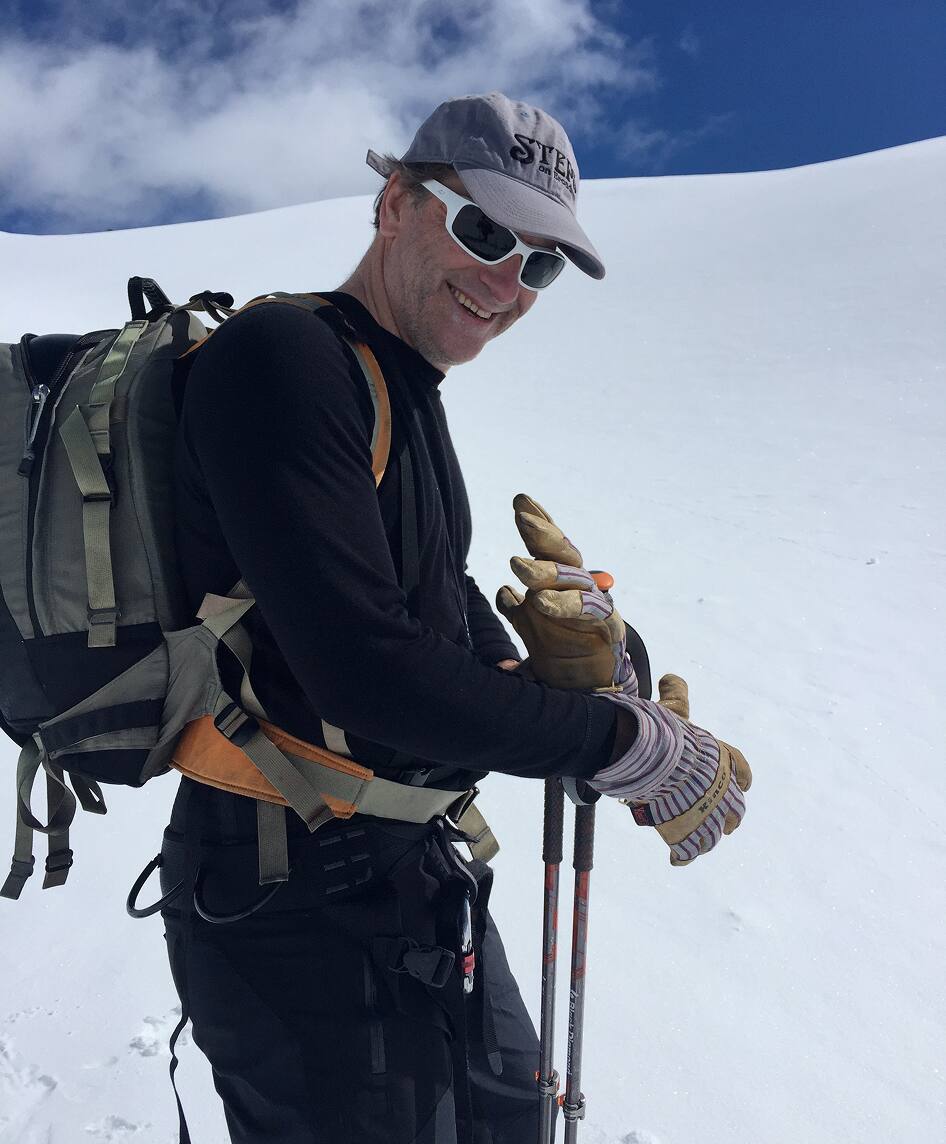
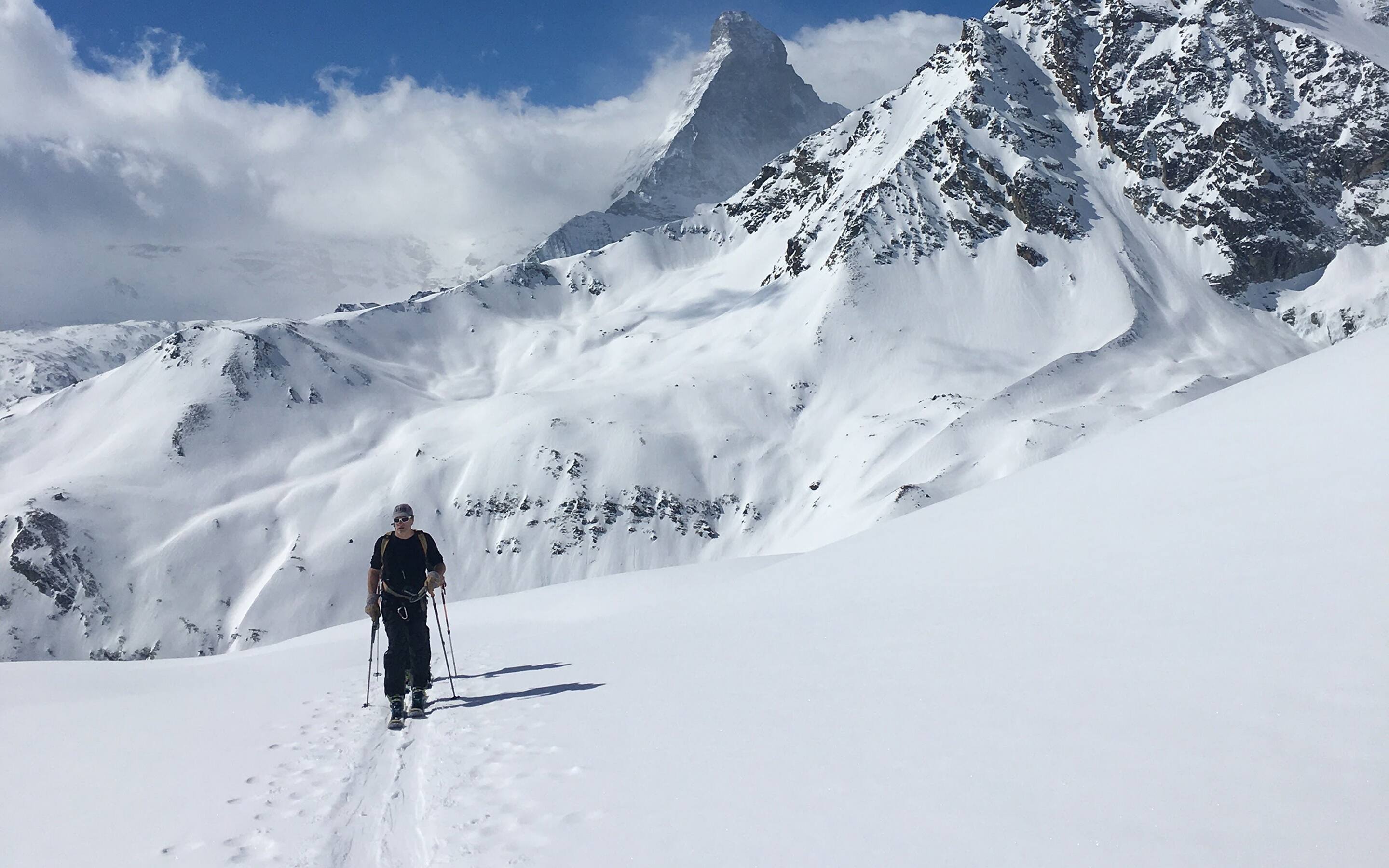
There’s a remote valley in the Swiss Alps that doesn’t draw as many skiers and tourists as the more famous or expensive ones that surround it. Let’s call it Valley X, in the coy-temptress way of the old surf and ski magazines. It lacks that iconic peak—a Matterhorn, Jungfrau, or Mont Blanc—or a glamorously decadent past, like Gstaad or St. Moritz. Its charms, as yet mostly unexploited, haven’t had a chance to curdle in the distillate of our contemporary wretched excess. And yet, here, too, the terrain is incomprehensibly vast, the snow-clad vistas stacked and foreshortened, bewildering to the mind and eye. The glaciers seem to tumble out of the sky. Villages cling to the hillsides, church bells peeling the hours. Lift systems web out in all directions from the narrow roadways that hairpin through the vineyards and cataracts. Valley X is a postcard, all right, but of a landscape you’ve never seen. One day a half-decade ago, my son and I were there with an old hand, an American friend, a writer who as a kid lived for several years in Switzerland. In some respects, Valley X was his secret—and so it’s also his friendship, his future company in these mountains, that I’m protecting here. My son was 17, stronger than me. We started our ramble in a sleepy resort village, on a funicular with no other passengers. It was a weekday morning in early March. There was fresh snow, a half a foot or so, and the storm clouds were breaking loose, revealing ramparts and bowls you could spend a decade trying to get to know. I might not be exaggerating when I say there were just a dozen other skiers there that day. The silence was almost unnerving, once you got clear of the machines. We caught a poma lift, one of those surface lifts where you ride up solo, skis on snow, with a metal stalk through your legs and a disc like a salad plate on your rump. It took us to the top of a vast alpine meadow, like an inland sea, that was low-angle enough for us to feel the boot-top powder but not the crust underneath. We fanned out, making broad fast turns. This wasn’t a marked trail. The pitch steepened and dropped us into a forest of ancient, gnarled stone pines, and we picked our way through, dodging the druids. We did a few more laps, giggling at our good fortune, and our solitude.
“You could descend from icy peak to budding orchard without ever having to remove your skis, even to cross patches of grass or wire cattle fences.”
My friend had learned to ski this way with his mother, not far from here, five decades ago, and I with my father, in the same era, a few valleys east. By this way, I mean away from the marked runs, reading the terrain and the avalanche danger, seeking out the optimal aspect. Not many people did it then. “We haf a look,” as the Swiss mountain guides say. It was a beautiful and magical thing to be able to do—not just to soar down untouched snowfields on skis, but to explore the empty tracts and altitude zones and to heed the changes in snow, stone, light, air, view, vegetation, and vibes along the way. You could descend from icy peak to budding orchard without ever having to remove your skis, even to cross patches of grass or wire cattle fences. This pastime is more popular now. The gear is better, but the snow can be scarce. On our third pass, we stopped at a cat track. It was 2 p.m. Almost time to check in to the hotel. We put on our skins—strips that adhere to the bottoms of your skis to help you walk uphill without sliding backward—and began skinning through the forest and then into a vast cirque. We sweated and chattered and then fell quiet, into a meditative rhythm. After an hour, we began to climb more steeply up a series of switchbacks, above the tree line. The clouds had mostly cleared, and the snow fields seemed to hold the blue and coral of the sky. And then, over a ridge, the hotel, perched at the edge of a steep drop and half shrouded in fog, thousands of feet above the valley floor. The hotel, of cream-colored plaster, with tiny wooden windows and a peaked lead roof, was four stories tall and a century and a half old, a crude and remote example of the Belle Epoque style once popular in these parts. We took off our skis on a terrace that overlooked the valley, fetched a round of beers, and drank them on the terrace, watching the sun drop over a distant ridge, as our sweat cooled. Inside, a long stone corridor led to the rooms upstairs, which were snug and creaky, with walls and floors of old pine, and a common bathroom at one end, up a stairway of worn slate. There didn’t seem to be anyone else here. Somehow, we’d wandered into a time machine. Now we wondered about ghosts. We showered and dressed in the casual sweats we’d carried in our backpacks. We had a cocktail, and my son and I played a few games of chess in a paneled parlor. Dinner, in an empty formal dining room with big plate-glass windows, was venison, rösti, and sauerkraut, with a crisp fendant, the valley twinkling in the darkness below. Next time, we said, we’d each pack a dinner jacket.
NICK PAUMGARTENis a staff writer at The New Yorker and the author of The Intangibles, a hockey memoir due out in Fall 2026, from Penguin Press.
More from
Culture
Mile Markers
Once you see the West from the backseat of a station wagon you’ll never be the same again.